
NCAA Division 3 Women’s Basketball Tournament
Sectionals (Round of 16)
Panzer Athletic Center, Montclair State University

Salisbury 63 Amherst 58

Montclair State 61 Bowdoin 54



 I have read two of Erik Larson’s previous works. I was totally engrossed in Devil in the White City and then picked up Thunderstruck. I found it to be almost the same story albeit about a different historical event and different killer. It was almost as though Larson was plugging the results of his research into a template for combining history and true crime stories. So I laid off his books for a bit. That is until a review copy of Dead Wake materialized on my kitchen counter. I’m glad it did.
What Larson does as well as anyone is to craft rich historical characters that have as much depth as the creations of good fiction writers. That isn’t just for well known figures like Woodrow Wilson for whom there are extensive writings both by and about, but for characters like second class passengers on the Lusitania and the captains of German U-boats. Every time I’ve read a Larson book I have at least once turned it over to take a look at the back cover to verify that it was indeed nonfiction.
Larson is a meticulous researcher who embellishes his stories with a minute level of detail. We learn, for example, that one of the passengers on the Lusitania was the New England bookseller Charles Lauriat. We know that he was carrying with him a rare original copy of Dickens’ Christmas Carol as well as some drawings by William Thackeray that he was bringing to London to show Thackeray’s sister. We even know that on the day of the attack he got up at 8 a.m.
What I don’t always like about Larson’s writing is that he has a bit of a flair for the melodramatic. Consider this sentence, referring to the earlier disappearance of an American citizen aboard a British ship that was attacked by a German submarine: “It was one more beat in a cadence that seemed to be growing faster and louder.”

Torpedo tube (photo by jurisamonen)
Dead Wake is a reminder of what a brutal affair World War I was. This is a war in which massive armies set up in trenches facing each other and fired away, not gaining so much as an inch in territorial advantage but killing and maiming tens of thousands of young men who were conscripted into service. It was a war in which civilians were consciously targeted and slaughtered as well. A war of terrorism, a harbinger of what we would see in the next 100 years. The sinking of the Lusitania was an act of terrorism. 1,195 people died. None were military personnel.
Nor were the combatants in the so-called Great War concerned about putting civilians in harm’s way. Although the Lusitania was a passenger ship it was carrying 1,250 cases of shrapnel-laden artillery shells produced by Bethlehem Steel and en route to the British troops on the continental front. Not that the captain of the German submarine who fired the torpedo that gutted the Lusitania was aware of this. In fact, if Larson’s account is correct he didn’t even know it was the Lusitania he was bringing down until after the fact.
If you watched the Oscar-nominated movie The Imitation Game, you saw the story of the British mathematicians who intercepted and decoded German messages in World War II. Part of that story was the cautiousness with communicating and using the information that they obtained for fear of Germany realizing they had cracked the Enigma code. At one point they withheld what they knew even though it meant a British ship was going to be destroyed. In World War I that group was called Room 40 and they were equally secretive. Larson suggests, in fact, that Room 40 may have had information that could have saved the Lusitania that was never communicated to the ship’s captain. He also raises the question of whether some in the British Admiralty refrained from any effort to ensure the safety of this ship in hopes that an attack on the passenger liner that had departed from New York would bring the U.S. into the war.
We all know what the outcome of this story is going to be. Nevertheless, Larson creates suspense by alternating chapters about life on the Lusitania and life on the U-20, the German sub which fired the fateful torpedo. He skillfully builds up that suspense until their worlds collide.
This is simply an enormously interesting book. It is the saga of the sinking of the Lusitania, but it is also the story of the lives of the people on the ship and on the submarine.
(There were no travel bloggers in 1890. There were no blogs. No Web. But there were more and more people in America ready to do some traveling and looking for places to go. So if there was such a thing as a travel blog in the last decade of the 19th century, this is what I think it might have looked like.)
 3. Grand Tour of America
The concept of a Grand Tour started in Europe as early as the 17th century. It has become something of a rite of passage for European, and especially English, noblemen and landed gentry. Upon completing their education and before settling in to a life of privilege, they take a pilgrimage to France and Italy and sometimes Greece, in search of art and antiquity.
In more recent times some of these Old World aristocrats have looked to America for a different Grand Tour destination. The Marquis de Lafayette and Alexis de Tocqueville are among the well known Europeans who famously set out on a Grand Tour of America. The first Grand Tours of the New World were all about points of interest in the Northeast. In the first half of this century that was likely to include New York City, the Hudson River Valley and the Catskills, Niagara Falls, the Connecticut River Valley and the White Mountains.
Now as modern rail tracks have been set down from coast to coast it is possible to offer a tour that can best be described as the Manifest Destiny of American travel. A transcontinental Grand Tour of America dwarfs the European tours both in terms of size and in natural splendor.
 The premier provider of Grand Tours of America is the Raymond and Whitcomb Agency of Boston. Just last year Raymond and Whitcomb offered its sixth annual Tour Across the Continent and Through the Pacific Northwest. The 72-day trip started and ended in Boston. Two other coast to coast tours left from Boston in the fall.
This year, Raymond and Whitcomb is planning a Grand Excursion of 66 Days including a Visit to Yellowstone National Park and an added tour across the continent to the scenic points of the Pacific Northwest and California. The Grand Excursion leaves from New York on Thursday, Sept. 1, and will cost $525.
The trip west will follow the Northern Pacific Railway Line starting in St. Paul. It includes a full week in Yellowstone. The western trip will also take in the scenery of the Rocky Mountains, Lake Pend d’Oreille and the Cascade Mountains. Upon reaching the Northwest the tour will include a visit to Victoria, capital of British Columbia, Seattle, Tacoma and a steamer trip on the Columbia River.
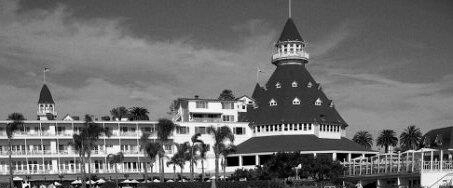
Hotel del Coronado
The trip from Portland down through California will be on the scenic Mount Shasta All-Rail Line. Time will be provided for an excursion to the Yosemite Valley and the Big Trees. And in Southern California, the travelers will spend three nights at the magnificent new Hotel del Coronado in San Diego.
The return trip will be along the Atchison, Topeka and Santa Fe Railway line through Arizona, New Mexico, Colorado and Kansas, connecting in Kansas City with the Chicago, Rock Island and Pacific Railway. And what Grand Tour of America would be complete without a stopover at Niagara Falls where the group will dine at the Spencer House.

(Kaz)
Traveling by rail on a Raymond and Whitcomb tour is the height of luxury. Guests will be accommodated in vestibuled Pullman Palace cars. Dining cars on the trains will provide three meals a day. And the trains include libraries and barber shops.
The cost of the Grand Excursion, in addition to double berth Pullman sleeper cars, includes any required stage or steamer fares, hotel accommodations, all meals and all transfer and handling of baggage. Travelers will arrive back in New York on Saturday, Nov. 5. A little later in the year, Raymond and Whitcomb will also be offering a 62-day Grand Excursion to the Pacific Northwest and California at a cost of $475. That trip leaves from New York on Monday, Oct. 13.
In planning its Grand Tours of America for 1890, the agency promises that “the route of the excursion combines in its constant succession of grand features the most diversified and picturesque scenery upon the continent.”
(Earlier 1890 Travel Blogger posts include Atlantic City and Wonderland.)

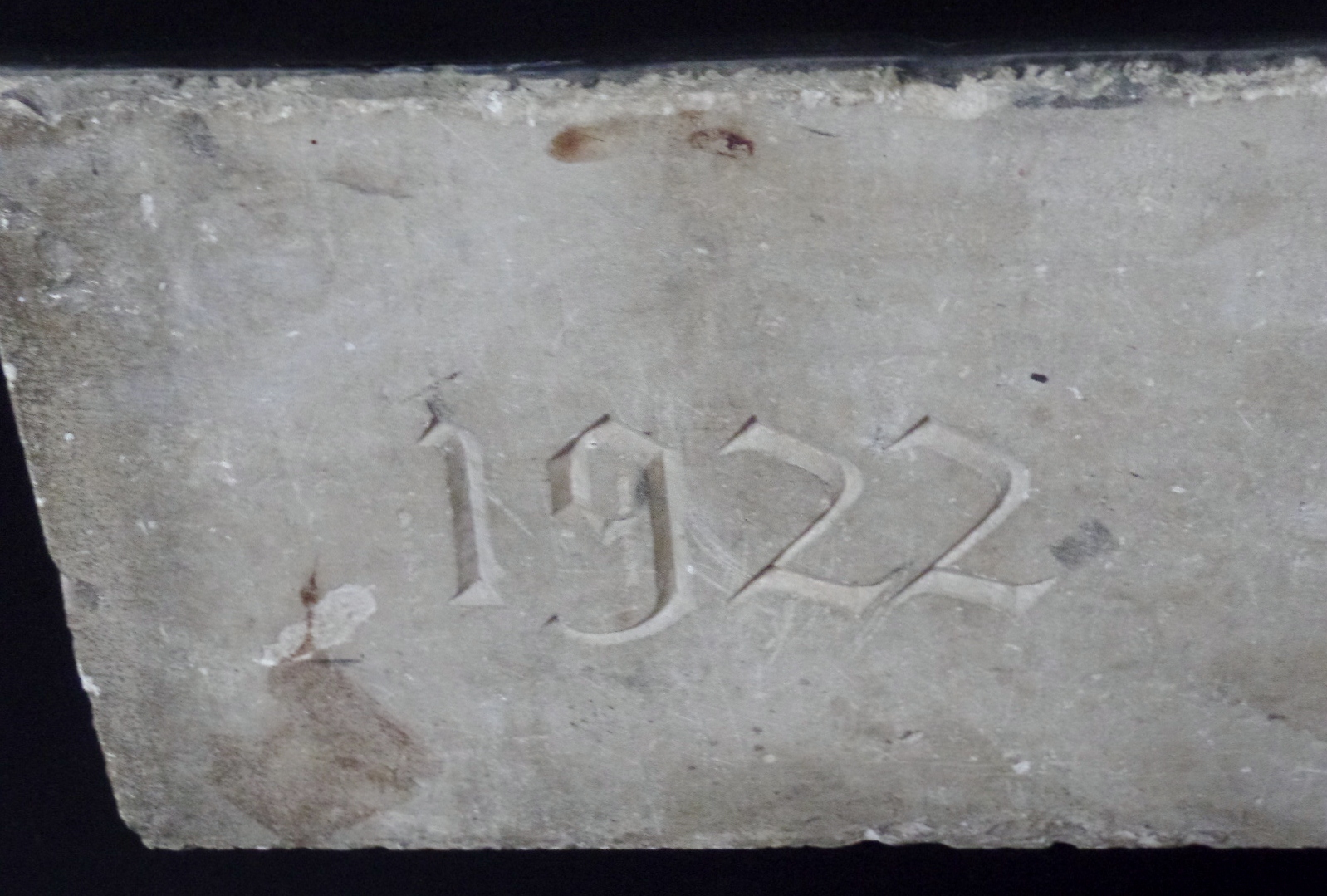
Baker Rink on the campus of Princeton University is not the oldest hockey rink in America. Mathews Arena at Northeastern University in Boston opened in 1910 and the Calumet Colosseum in Michigan’s Upper Penisula was built in 1913.
Baker Rink dates from 1922. It is over 90 years old and continues to be the home of the Princeton University men’s and women’s ice hockey teams. It only seats 2,000 and is as good a place to watch a hockey game as you’ll find anywhere.

Too bad they don’t still wear those striped leggings.




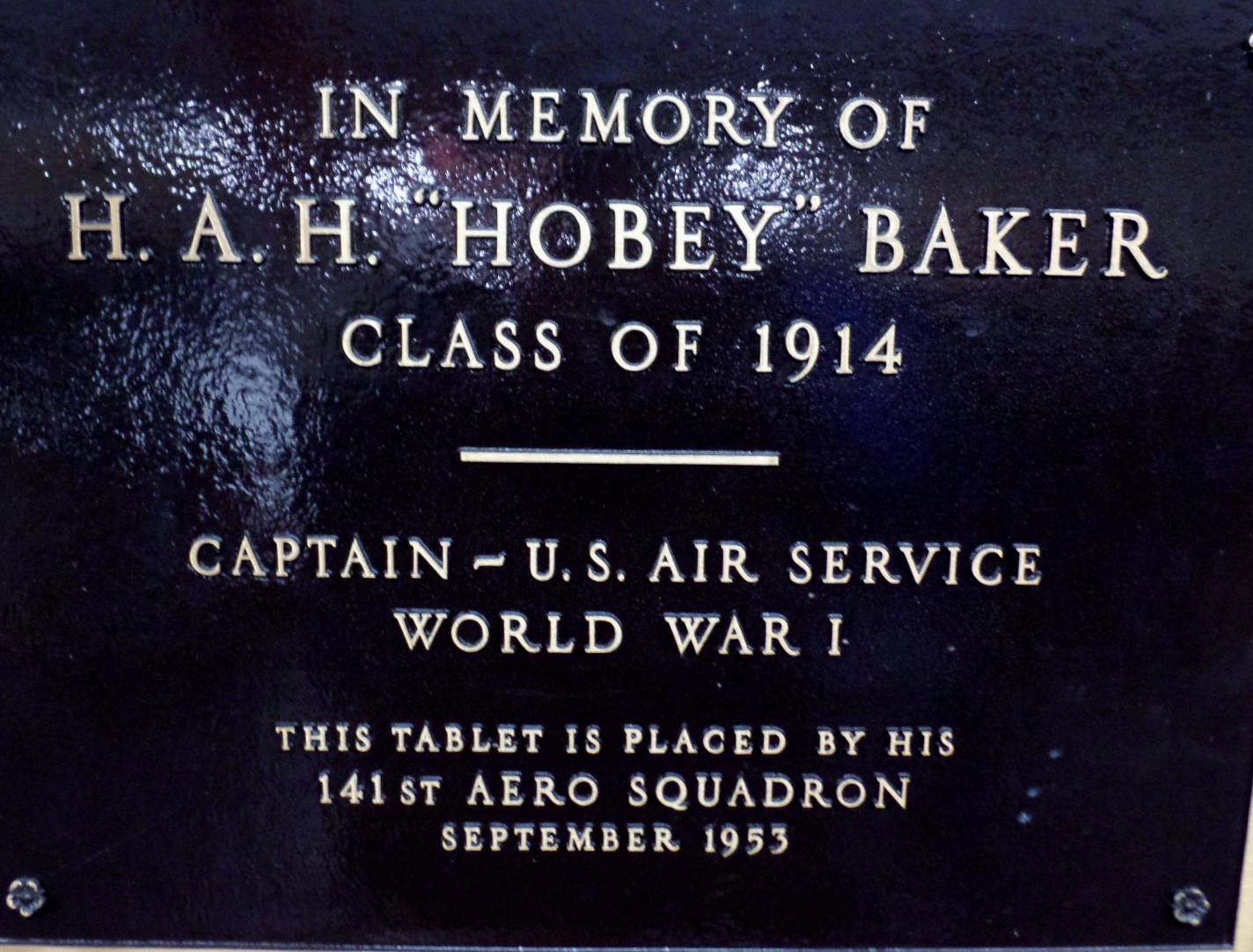
Baker Rink is named after Hobie Baker. A member of the Hockey Hall of Fame, Baker led Princeton to the national championship in 1912 and 1914. He later enlisted in the Air Force and served in Europe during World War I. He did in 1918 in a place crash in France.
The Hobie Baker Award, shown above, is given out each year to the outstanding player in men’s college hockey. The award for the best women’s college hockey player is also named after a Princeton skater, Patty Kazmaier. A member of the class of 1986, she played four years at Princeton and was the Most Valuable Player in the Ivy League in her senior year. Kazmaier also passed away prematurely, dying from a rare blood disease at age 28.
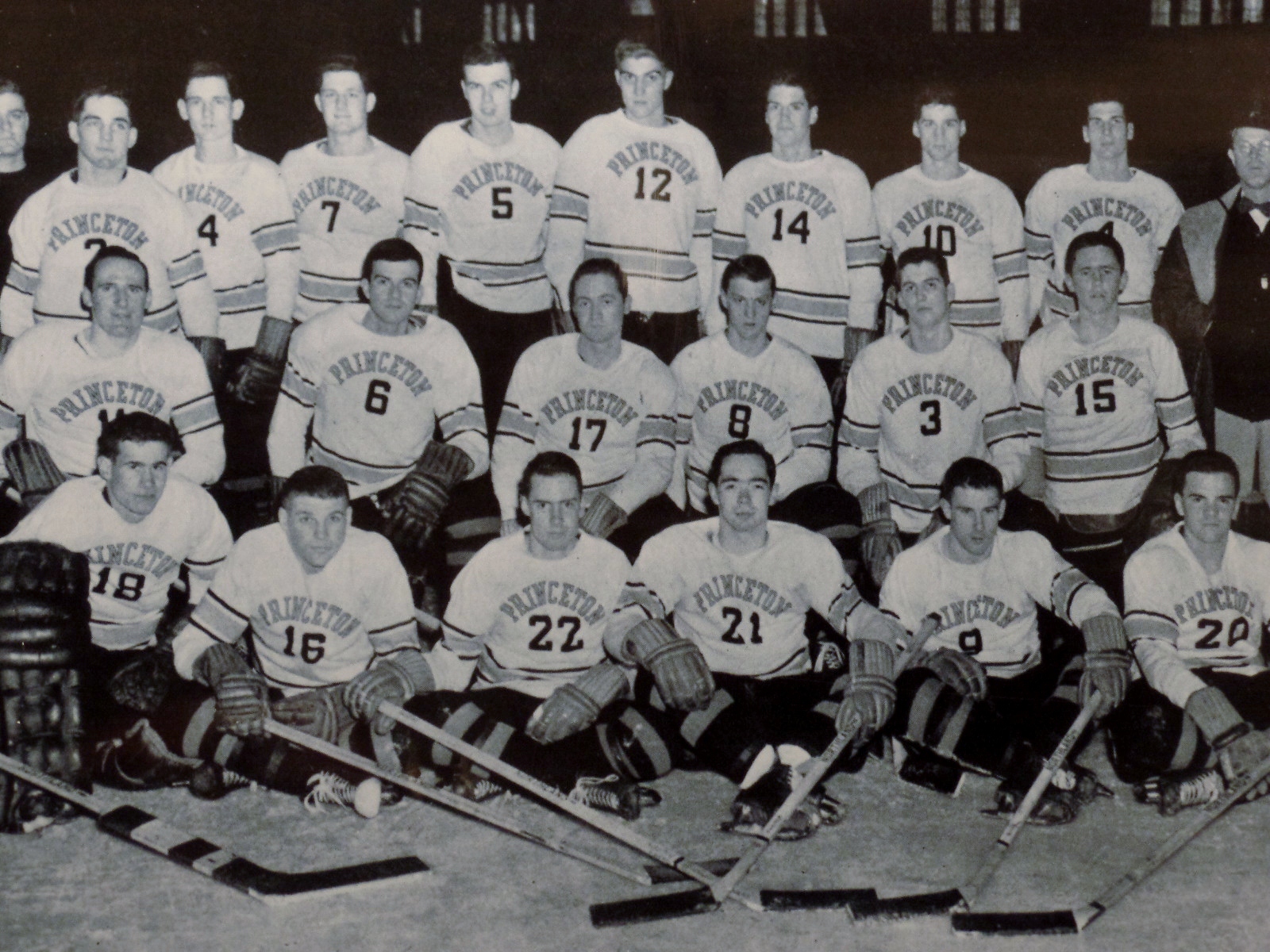
Yesterday

and today

It may be hockey, but it’s still the Ivy League
(There were no travel bloggers in 1890. There were no blogs. No Web. But there were more and more people in America ready to do some traveling and looking for places to go. So if there was such a thing as a travel blog in the last decade of the 19th century, this is what I think it might have looked like.)

It was 18 years ago in 1872 that Ulysses S. Grant signed the bill creating Yellowstone National Park. And it was at the same time that the Helena Daily Herald christened this massive expanse of one-of-a-kind natural oddities Wonderland.

Moose habitat
Depending on who you talk to, the creation of Yellowstone as a national park was intended to preserve this scenic Wonderland for all Americans, to protect it from commercial exploitation and to act as a reservation for the park’s wildlife, including buffalo, bears, elk and antelope. But others say the idea came from Jay Cooke as a way to load the potential visitors onto his Northern Pacific Railway. Whatever the reason, Yellowstone exists today at the edge of wilderness and civilization, a place that can still be discovered and explored.
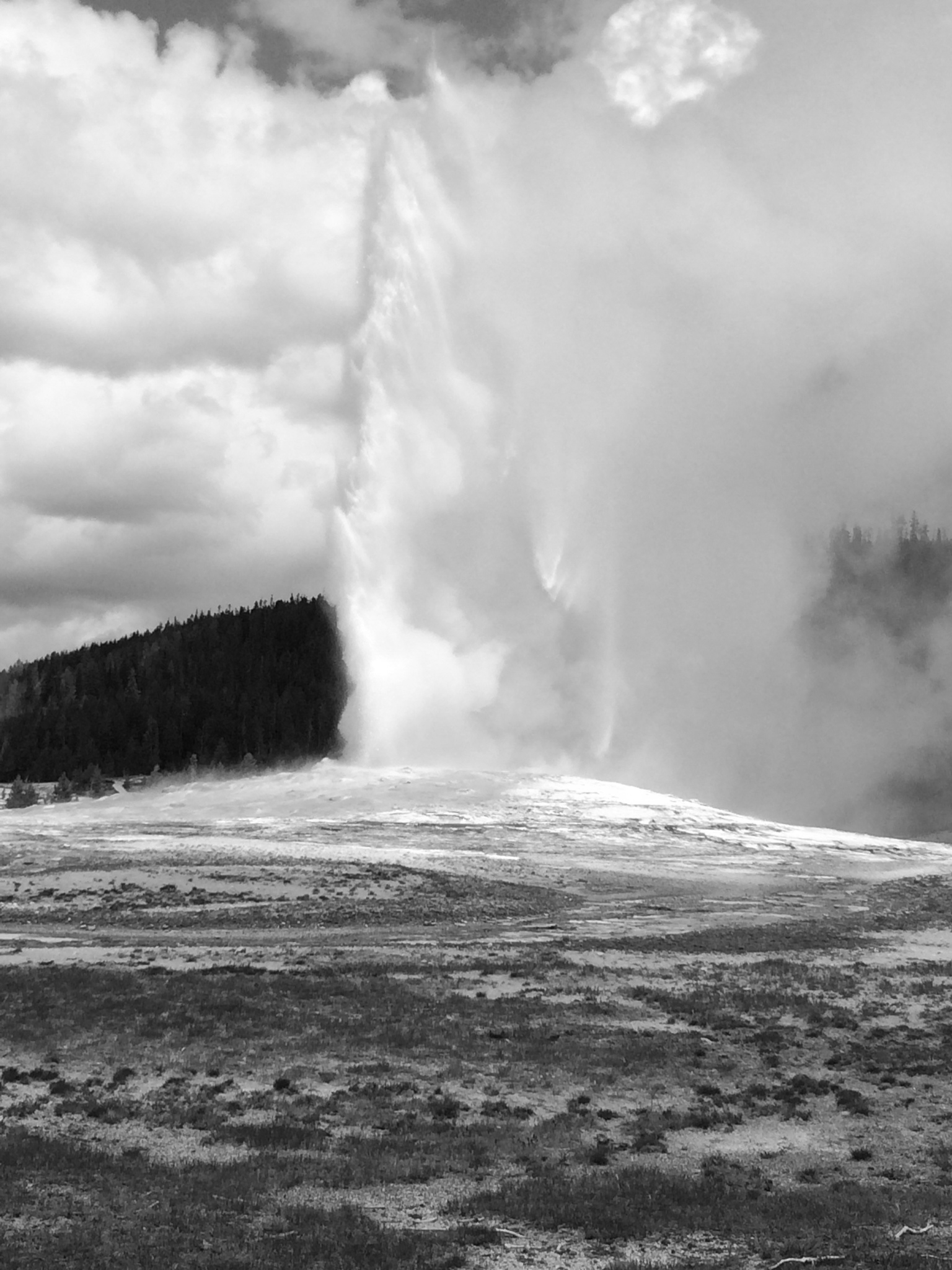
Old Faithful
It presents a collection of natural wonders that can be seen nowhere else in the world. There is the scenic beauty of stops like the Yellowstone Grand Canyon but there is also an unending array of geysers, springs, and boiling mud pots, many in striking colors and surrounded by unusual rock formations. Sights like these, as you might imagine, are unpredictable. One of Yellowstone’s geysers goes off only once every fortnight. Old Faithful, on the other hand, got its name by being just that and putting on a show on a regular schedule for all visitors.
A trip to Yellowstone is both vigorous and invigorating. If you are coming from the east coast the most popular route is to take the Northern Pacific to Livingston, Mont., and to change there for a spur route to Cinnabar, Mont. At Cinnabar you can board a stage coach for the 8-mile ride through the northern entrance of the park to the Mammoth Hot Springs Hotel. If you’re coming from the West you can take the Utah and Northern Railway to Monida, Mont., then take a stage coach through the West entrance.

Mammoth Hot Springs
At the Mammoth Hot Springs Hotel you can book 5 days of lodging, meals and transport through the park for $40. Travelling within the park is on horse-drawn wagons, each with four horses and capacity for 11 passengers.
Some visitors will rent a wagon and camping equipment in Montana and explore the park at their own pace, often with guides and servants. Others choose to explore on horseback. The Northern Pacific publishes the Wonderland guides which include information about Yellowstone’s attractions and maps.
In addition to the famous Mammoth Hot Springs Hotel, a new hotel, the Lake, recently opened near Yellowstone Lake. And the soon-to-be Fountain Hotel is under construction near Old Faithful. For the campers there are tent camps at the Norris Geyser Basin and the Upper Geyser Basin. President Chester Arthur choose to camp on his tour of Yellowstone in 1883.

The Paint Pots
Yellowstone is a vast territory and many of the attractions are quite far apart. It is more than 30 miles from the Mammoth Hot Springs to Yellowstone Canyon and almost 40 miles to Old Faithful. Coach tours of the park may cover as much as 40 miles a day. In the last decade, the Army Corps of Engineers has built some new roads and made getting around the park a bit easier. Since 1886, Yellowstone has been managed and maintained by the U.S. Army.
While many come to Wonderland to see the sights, others see it as a path for restoring physical and mental health. One well-known German doctor prescribes its spring water, because of its arsenic content, as an effective treatment for nervous disorders. Others cite the healthfulness of the sulphuric smell that pervades much of the park. And of course we all understand the restorative value of camping.
At this early stage of its existence as a national park, Yellowstone remains an adventure, a way for travelers to imagine themselves on a Lewis and Clark expedition. It is a place to feel free and explore.
Technology has democratized publishing. It has, through social media, given advertisers and marketers a way to access their audience without buying space. It has changed the way we distribute content and the way we measure its effectiveness.
Has it changed everything? No. “Technology has not changed the basic human need for a story that’s worthy of our attention,” according to New York Times ad exec Meredith Kopit Levien.
Kopit Levien opened today’s Social Media Week panel discussion by raising the example of Uber. If Uber had focused only on the technology and not the customer experience, they would not have grown the way they have. They “created something much better by caring about the quality of the ride.”
She suggested that the same issue applies to storytelling. The quality of the content though has sometimes gotten lost because it has been subordinated to the “mechanics of distribution.”
“You can buy impressions, clicks and page views,” Kopit Levien said. “What you can’t buy is rapt attention. You can only get that through great storytelling.” She predicted that the next wave of technology innovations will be focused on what goes into the platform not on the platform itself.
The New York Times-sponsored panel included advertisers, marketers and consultants in the space. Although some, like Goldman Sachs’ Amanda Rubin had much trendier sounding titles, Global Co-Head of Brand and Content Strategy. That reflects the direction all the panelists see advertising and marketing as moving toward.
Rubin described “engagement with audiences” as a focus that has superseded advertising. She also noted that it is sometimes hard to stay in touch with the basics of marketing, like reaching a targeted audience, in a world of technology “bells and whistles.”
Edward Kim, founder of Simple Reach, described us as being into the push rather than the pull era of the Internet. In the pull era we would go online, look for the content we wanted and call it up. The push era requires it to be on our phone when we boot it up. The only effective way to bring your message to your audience in a mobile format, Kim said, is content
John Ohara, SVP strategy, Giant Spoon, predicted that the next focus in trying to engage audiences and measure effectiveness will be focusing on commenting and chatting. How do brands become part of a dialogue that keeps them in the conversation.
The archived Livestream feed of today’s discussion is available here.
Technology will change not only the cars we drive but the way both people and parcels are moved around the world and the environments in which that transportation takes place. Today’s Social Media Week panel on the Future of Transportation included a representative from a big car company, a start up and an academic.
Erica Klampfl, whose title at Ford is Future Mobility Manager, talked about some the trends that Ford looks at that will influence their products in the future. These include increased urbanization, the growth of the middle class, air quality issues and changing customer attitudes, such as putting off life events like getting married and buying a house at a later age.
Reilly Brennan, a professor at Stanford, talked about the aging of the population. He noted that someone born in 2015 has a 50/50 change of living to be 100. That suggests a growing need for mobility solutions that do not involve driving a car.
One of the most likely and most interesting changes that all in the panel envision coming to cars involves software. Brennan pointed to the phone as a model where regular software updates refresh your phone. Cars, on the other hand, tend to get worse with age. Can a software refresh be applied to cars that makes them seem renewed if not new? These panelists think so. They also suggested that software updates could in the future take care of a lot of recalls.
Cars have already and will continue to get smarter. Another panelist, Jamyn Edis, is the CEO of Dash, a company that makes a device that can be installed under the dashboard and connected to a smart phone. That device can do things like tell you why your check engine light is on, what needs to be done and how much it will cost to make the repair. The Dash device is also an example of the enormous amount of data and intelligence that can be accumulated by a smart car, data about not just vehicles but drivers, traffic, routes and roads.
The self driving car is something that has created a lot of interest, but Edis cautioned that it is not imminent. He noted that Google, which is probably the leader in this area, has acknowledged that we are a good 10 to 20 years away from having mainstream self-driving vehicles. There is however a continuous development of features, like aids to parking or automatic breaking, that are moving vehicles incrementally in that direction.
Technology offers the opportunity to not only make vehicles smarter but to make cities smarter about how they move people around. Colin Nagy, executive director of the Barbarian Group, who moderated the discussion, raised the example of light posts that can help you find a parking spot or navigate around traffic.
While transportation planners look at single-occupancy vehicles as a wasted resource, in the future we may feel the same way about single purpose vehicles. Brennan said “a vehicle on the road should have a number of uses.” And one of those uses is moving parcels. They speculated on whether Uber will get into shipping.
You can access an archived feed of this session here.
One percent of the employees of large tech companies are African-American. Of the 20 largest tech companies there are 300 C-Suite employees, 6 are African-American and 3 are Latinos. Those are just a few of the statistics bandied about in Rev. Jesse Jackson’s conversation with ThinkUP CEO Anil Dash at today’s Social Media Week session on Diversity in Tech (or lack thereof).
Jackson presented this as a lost opportunity for Silicon Valley. “We represent value add, not cost of doing business ,” he said. By comparison he noted “We didn’t know how good baseball could be until everybody could play.”
People of color represent 25% of the marketplace for tech services and apps. 25-30% of
Twitter users are black or brown, according to Jackson, who suggested that in this respect the tech companies are out of synch with their market.
The lack of diversity in tech, according to Jackson, is a result of differential access to capital, lack of appropriate educational infrastructure and failure to enforce the law. “It is not a talent deficit, it is an opportunity deficit.”
His group found, in researching diversity in the tech sector, that many large tech companies never filed the Equal Employment Opportunity reports required by law. He said the policies are not being enforced and that “we didn’t get the data because they are embarrassed by the numbers.” Speaking of the large tech companies he commented, “We can solve every problem imaginable except to hire the people who live in our neighborhood.”
He pointed to the preponderance of Asians in the tech sector as being a result of their having access to focused education. Jackson suggested every town or city should have STEM education.
Access to capital is one of the barriers for minorities. Jackson proposed that the money that large tech firms are moving offshore to avoid taxes could be used to create a development bank.
Intel was cited as one company that has made a real commitment to diversity. “The president of Intel kind of got it,” Jackson said.
In keeping with his activities, past and present, Jackson said those who are locked out must demand change. “Struggle for change comes from the bottom up, not the top down.”
This conversation did after all happen at Social Media Week and Jackson described social media as “a medium to change and make America more just.”
Listen to Jackson’s comments in their entirety here.
Martha Stewart is a committed geek. Or at least that is what she would have us believe based on her conversation with Sophie Kelly, CEO of the Barbarian Group, in Tuesday’s Social Media Week session “The New DIY, Drones, Makers and Bots.”
Martha says she bought an IBM computer in 1982. She says she was one of the first investors in Google. She says she got her first drone 2 years ago and has a collection of drones. We were shown pictures of her farm taken from one of those drones. She says Martha Stewart Living was one of the first magazines to adopt the Apple platform for design.
Martha says it is important to promote your brand. She said she doesn’t mind doing that promotion. No kidding.
You can listen to the full conversation with Martha Stewart here.
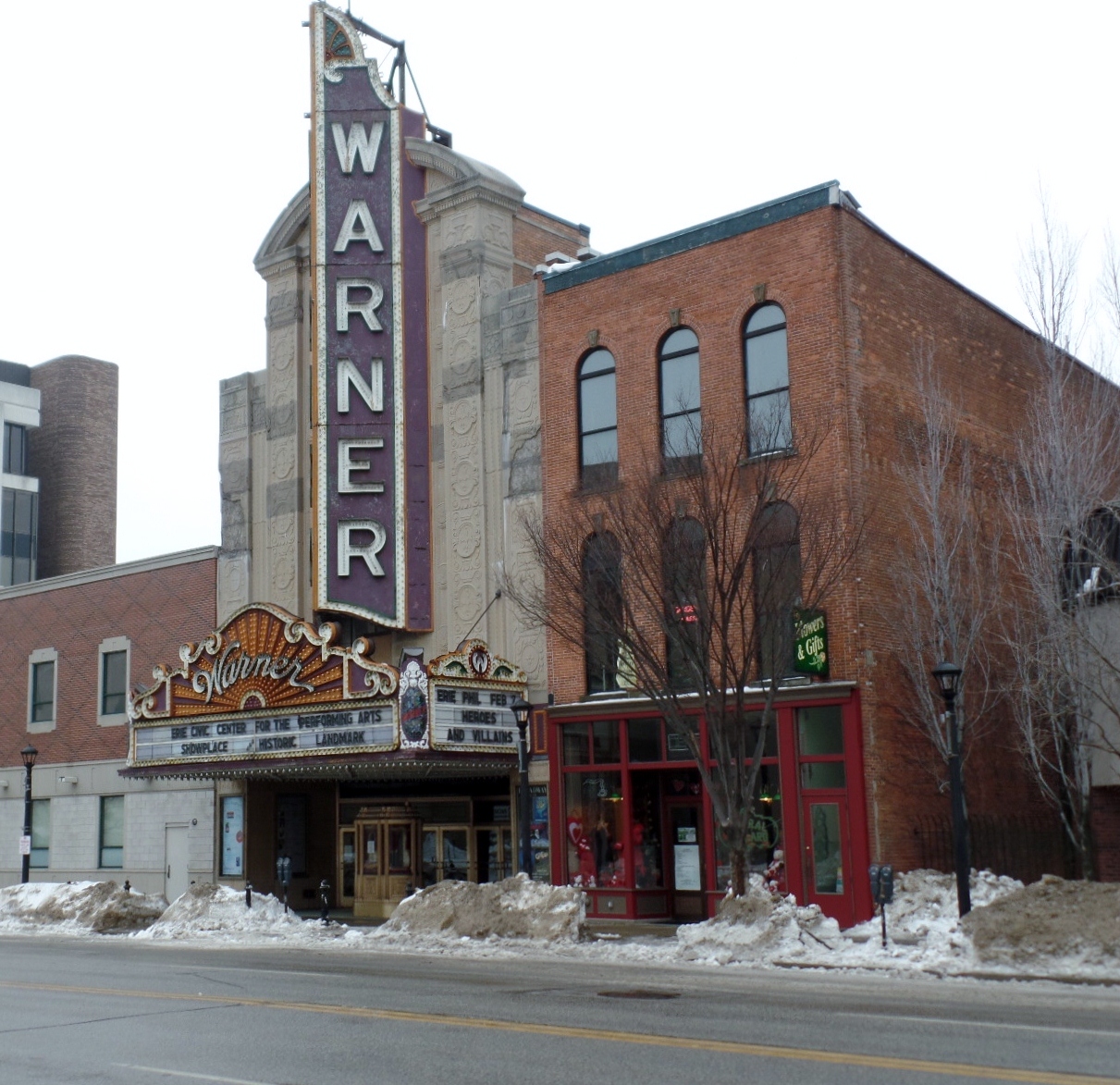
The Warner Theater in downtown Erie opened as a movie theater in 1931. It is now owned by the city and has since been converted to a performing arts center. Listed on National Register of Historic Places.
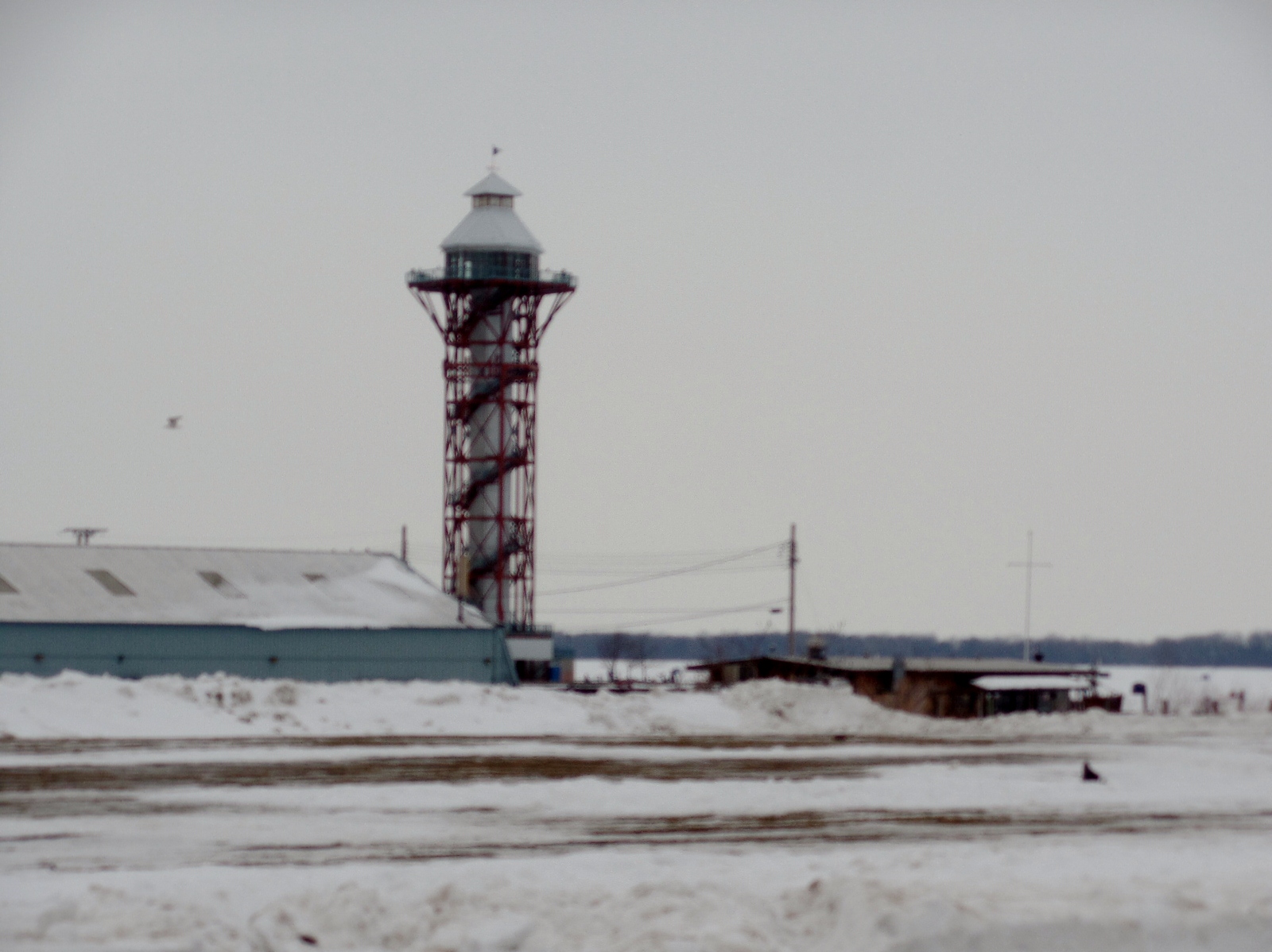
The Bicentennial Tower on the Erie bayfront.

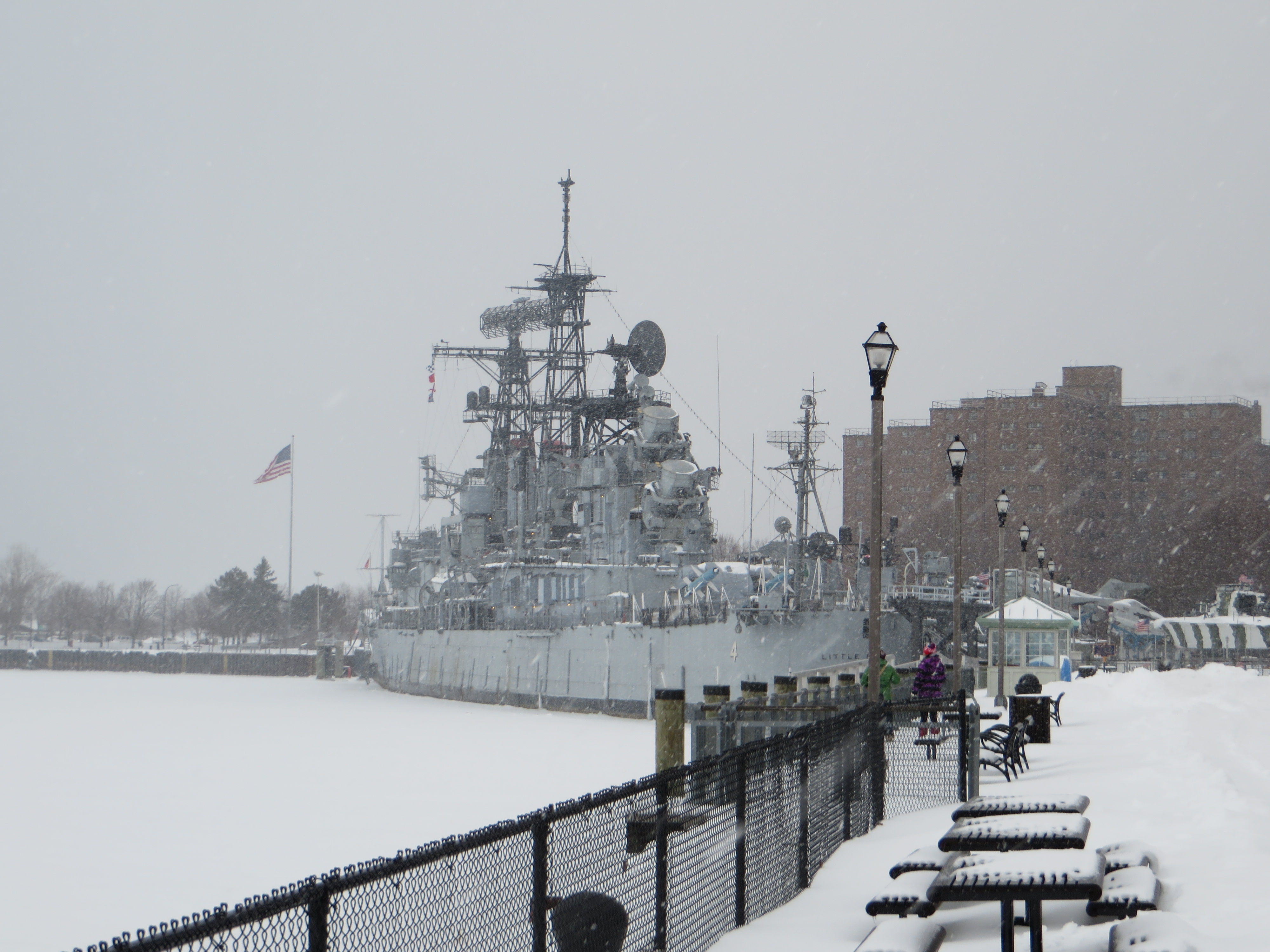
Docked at the Erie bayfront

Part of the 11 miles of beaches at Presque Isle State Park near Erie, Pa.

Ice fishing on the lake.

The Lake Erie Concord Grape Belt stretches from Harborcreek, Pa., to Silver Creek, N.Y.

The vineyards in winter.

How you drive in Buffalo

The Anchor Bar, where the first Buffalo Wings were served.

And here they are.

Hockey night in Buffalo.

First Niagara Center
 off the leash