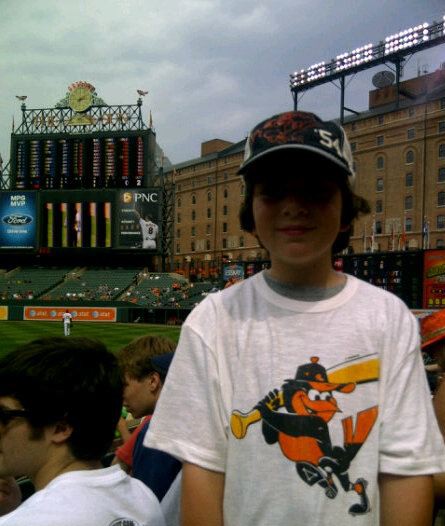
A Baseball Fan’s Retirement Guide

There must be a lot of people retired, retiring and starting to see retirement on the horizon because there is no shortage of folks ready to offer retirement “counseling.” Most of it is financial or healthcare related. I’m going to jump on that bandwagon and offer some advice for a niche retiree audience. The baseball fan.

You do not really have to be retired to appreciate this guide. You could be working as a bartender or a barista while trying to figure out how to parlay your English or history or music degree into a job you can live on and live with. Or maybe you’re an older worker whose job was “eliminated” (until someone could come along to do it at half the salary). Or maybe you’re a freelancer of some type going through a slow season. The two things you need are free time and interest in baseball.

First of all, don’t be an MLB snob. I assume that if you are reading this you are probably not an investment banker on a hot run, so if you want to get to a full summer of games don’t forget the minors. I made the case for minor league baseball in last week’s post (Money Changes Everything) but if you missed it, here’s a quick review. It’s cheaper, you sit closer to the action, there’s not much traffic and it’s usually easy to park. More importantly, the minor league teams don’t have ESPN, Fox and every daily newspaper in the country promoting their game and their league so the only way they can be successful is to focus on the fan experience of the folks that come to the park.

And within the realm of minor league baseball, don’t dismiss the independents. While the lack of major league affiliation may mean that you aren’t going to see the top draft choices as they try to work their way up the ladder, what you will see is players who actually have more experience than most of the lower division affiliated minor leaguers and often play better ball.  Two of the best places to catch a ballgame in the New York area are TD Bank Ballpark in Bridgewater, N.J., and Provident Bank Park in Pomona, N.Y., home of the independents Somerset Patriots and Rockland Boulders, respectively. (See Best of the Minors 2014.)

Provident Bank Park, home of the Rockland Boulders.

Provident Bank Park, home of the Rockland Boulders.

As I noted in a earlier post (Childhood Heroes), there was a time when all of the most important baseball games, the World Series and the all-star game included, were played during the day. Now those games often stretch past midnight on the east coast and are started at the worst possible time (with shadows all over the field) on the West Coast. So first children were eliminated as attendees and then, through the collusion of MLB and the TV networks, the bar was raised to knock out anyone who had to get up in the morning.

You can, however, still go retro and see baseball the way it was meant to the played in the bright sunshine of the middle of the day. Major league teams will schedule a few games at 1 p.m., usually on get-away day. That is the last day of a homestand. The team is going to have to travel to another city for its next game so the daytime start gives them a little extra travel time. The minor league teams start their midweek day games earlier, 10:30 or 11 a.m., making it easier for the school and camp groups who are attending. Not to mention the long bus trips they may have coming up before their next game.

Their bright colored t-shirts makes it easy to spot the campers watching the New Jersey Jackals at Yogi Berra Stadium

Their bright colored t-shirts makes it easy to spot the campers watching the New Jersey Jackals at Yogi Berra Stadium

Doin' the YMCA at a Somerset Patriots game

Doin’ the YMCA at a Somerset Patriots game

Who goes to these games? A big part of the crowd is school groups in the spring and campers in the summer. They are not always the most attentive audience but they will liven the place up. You have not fully experienced the obligatory between inning YMCA song until you’ve done it in a ballpark full of campers from the Y. The other folks that wander in for the midweek day games are real baseball fans who will be more than happy to talk about the game. Nobody goes to a 10:30 a.m. minor league game on a date. Nor is anyone there to network.

Here’s a few more tips for enjoying baseball in your retirement:

You don’t need to plan this stuff in advance. Midweek daytime baseball doesn’t sell out (except on opening day). Go when you feel like it or when the weather looks good.

Buy the cheapest available ticket. At the minor league games they are happy you’re there and don’t give a shit where you sit. The majors still put an usher at the top of every section to enforce seating rules, but because most modern baseball stadiums are designed with wide open concourses you can alternate between spending a couple innings in your crappy upper deck assigned seat, watching from a café table near the concessions and standing behind the lower level stands.

If you are going to a major league game consider public transportation. While it may not be so convenient for you on weekends or nights because of sparse scheduling, if you are going to a weekday game you are traveling in peak times and you rarely have to wait long for a bus or train or subway.

I usually like to eat lunch at the ballpark but beware of the minor league team that doesn’t make proper accommodations to get food and snacks to the school and camp groups. If, for example, you go to an 11 a.m. Staten Island Yankee game, you can kiss the idea of lunch goodbye because you’ll never get near the concession stands. (Most are better organized than that.)

All of the minor leagues are shut down now and the MLB playoffs are in the final weeks, but some of the schedules are already starting to come out for 2015 so you can use the offseason to plan your summer of retirement baseball. I go to each teams Website and create a composite schedule of all midweek day games. I then go to a map app and figure out the driving time to all of the ballparks within 60 or 90 minutes of my house and add that to the bottom of the schedule.

So when April comes around, I’ll be ready.

Posted in Baseball, Sports | Tagged , , , , , | 1 Comment

17-Ton Marilyn, Enormous Abe and a Pitchfork in the Sky

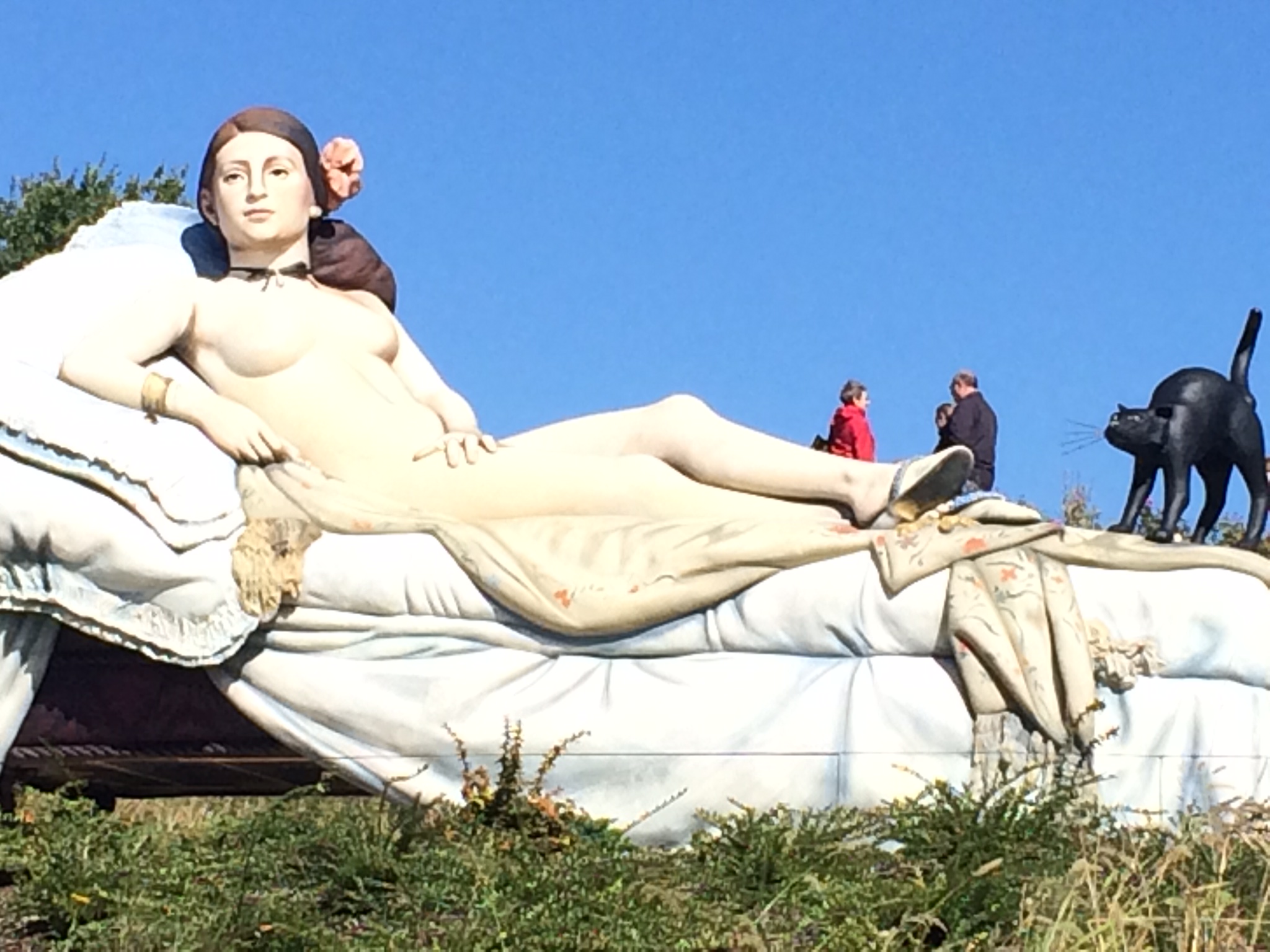
Forever Marilyn

Forever MarilynForever Marilyn is part of the Seward Johnson, The Retrospective exhibit at the Grounds for Sculpture in Hamilton, N.J. The 84-year-old New Jersey native was the founder of the Grounds for Sculpture in 1992. More than 150 of his works are on display. The exhibit was scheduled for the summer of this year but it has been extended and will continue until July 2015.

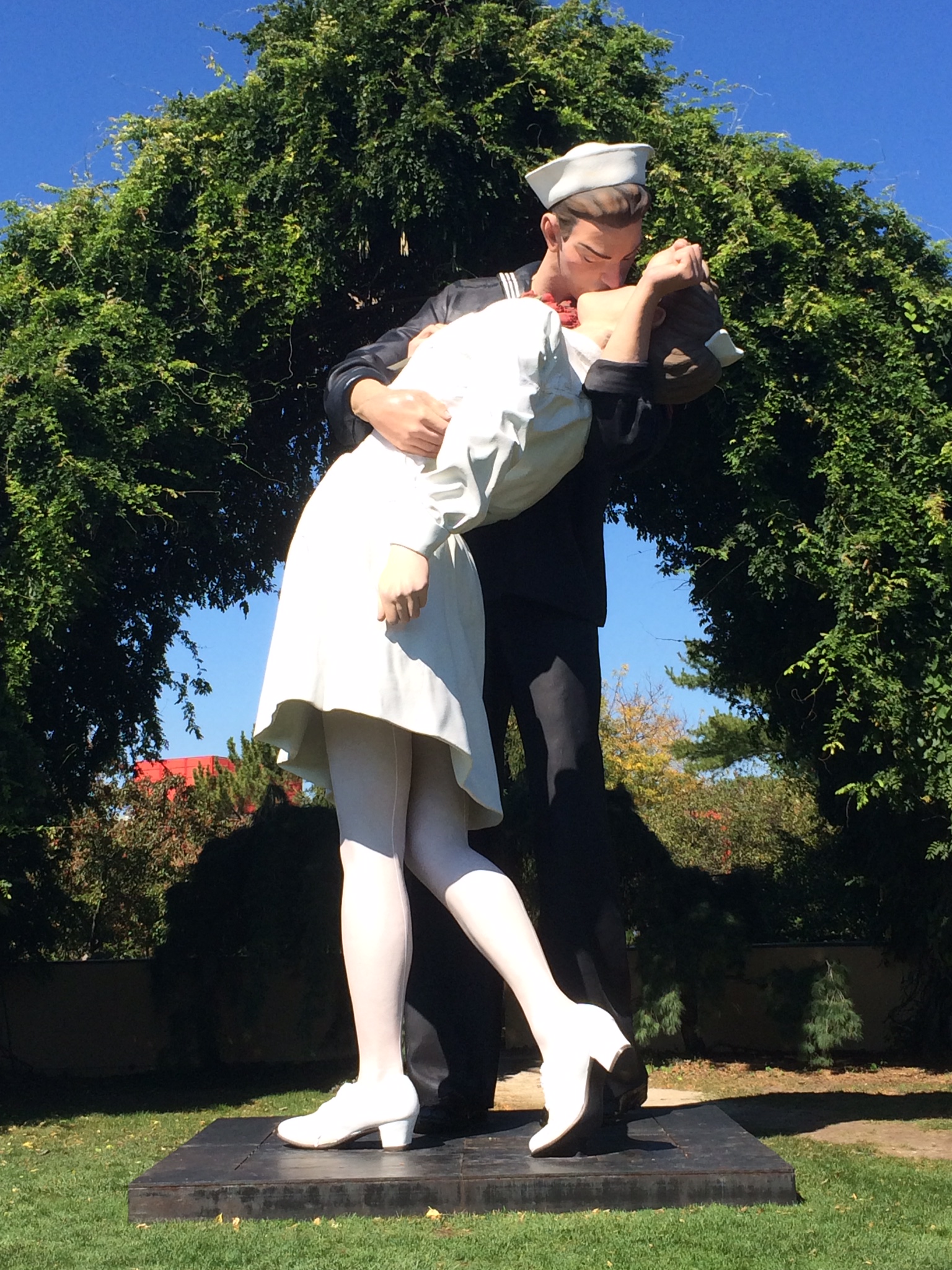
Forever Marilyn, completed in 2011, is part of Johnson’s icon series. Other works in that series, Return Visit, God Bless America and Unconditional Surrender, are shown below.

Forever Marilyn

Forever Marilyn

Return Visit

Return Visit

Unconditional Surrender

Unconditional Surrender

God Bless America

God Bless America

The Works of Seward Johnson

All of the works shown above are enormous. Forever Marilyn is 26-feet high and weighs 17 tons. Also on display are a number of Johnson’s life-sized sculptures, part of his Celebrating the Familiar Series.

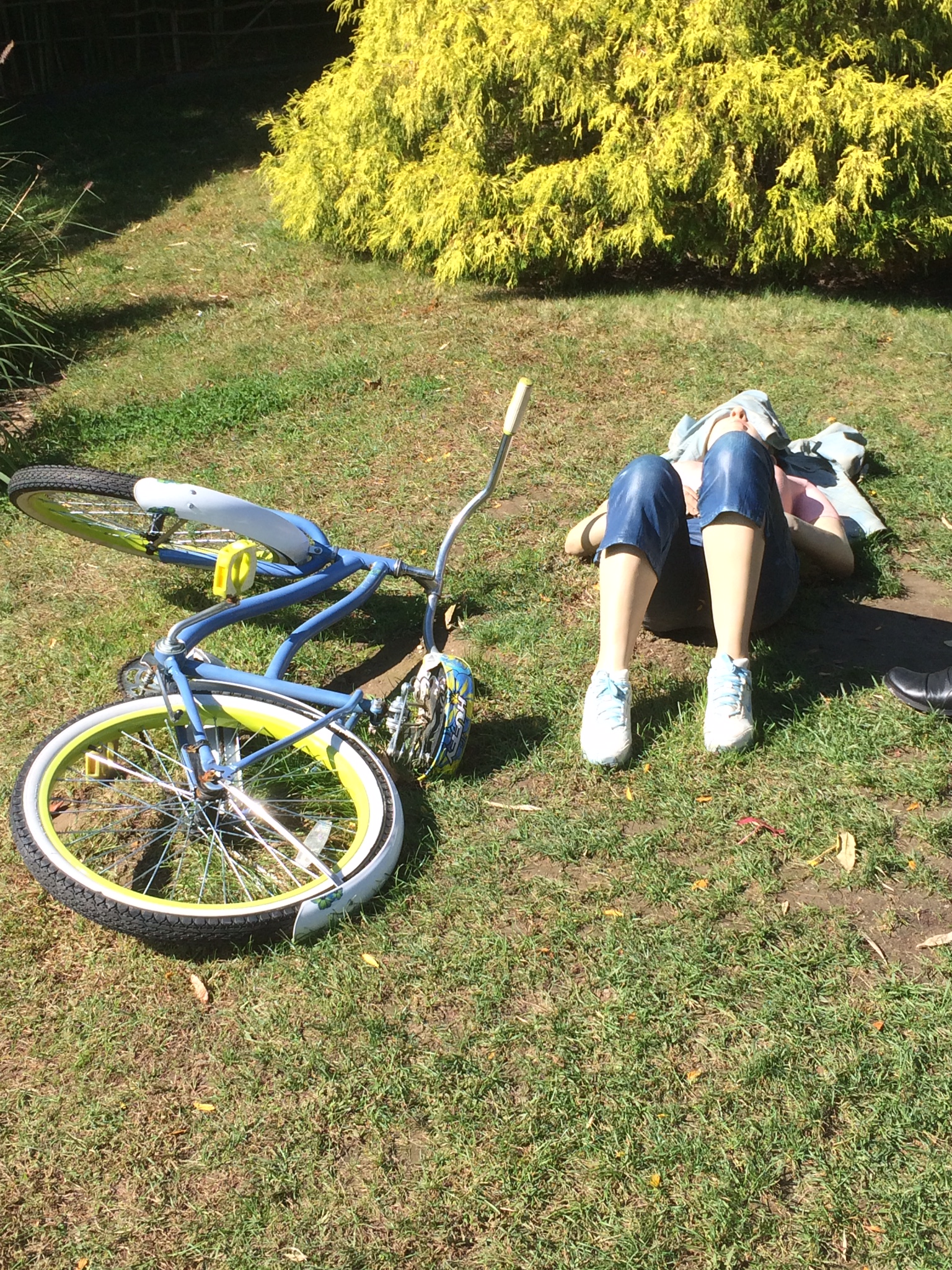
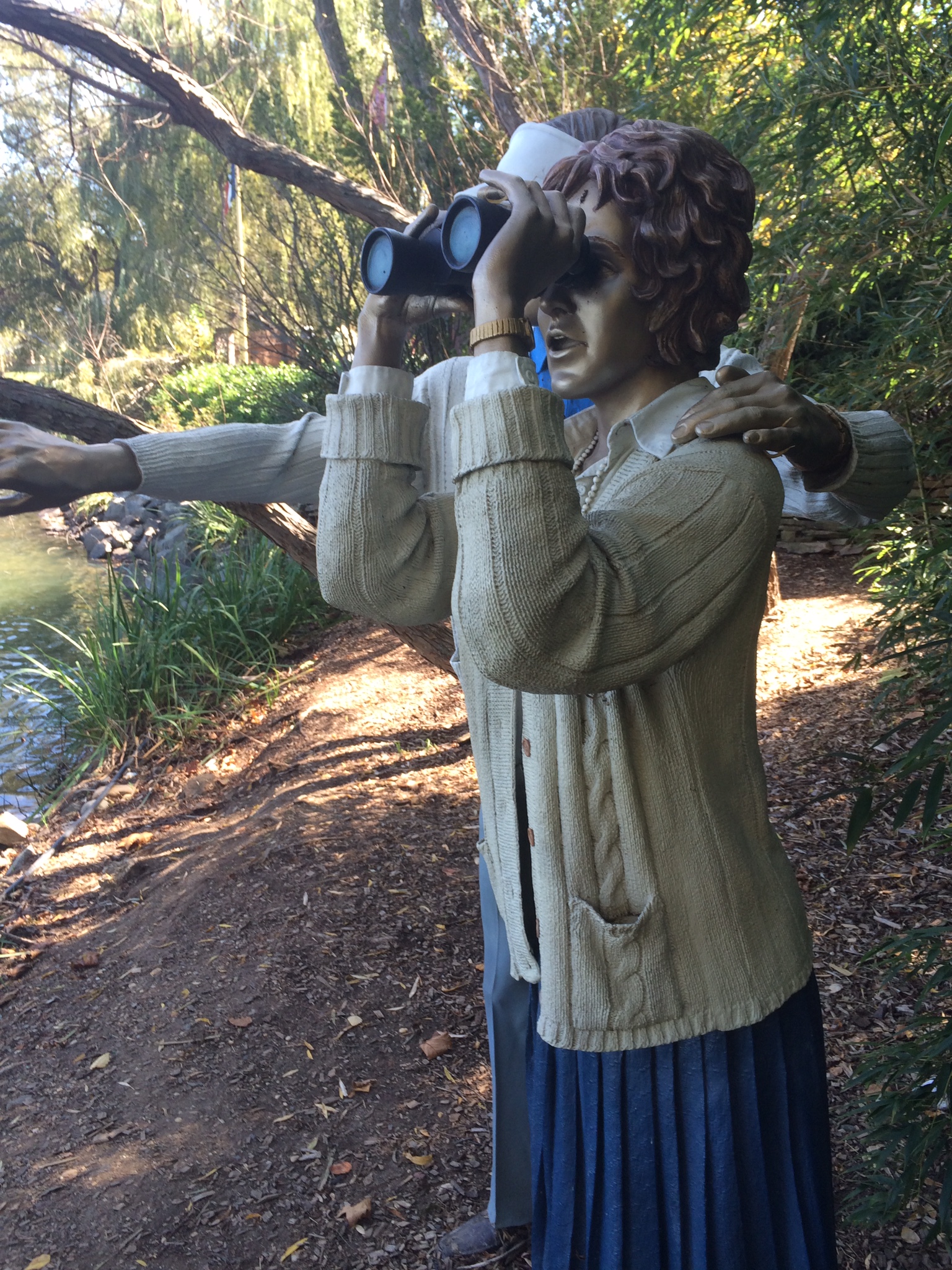
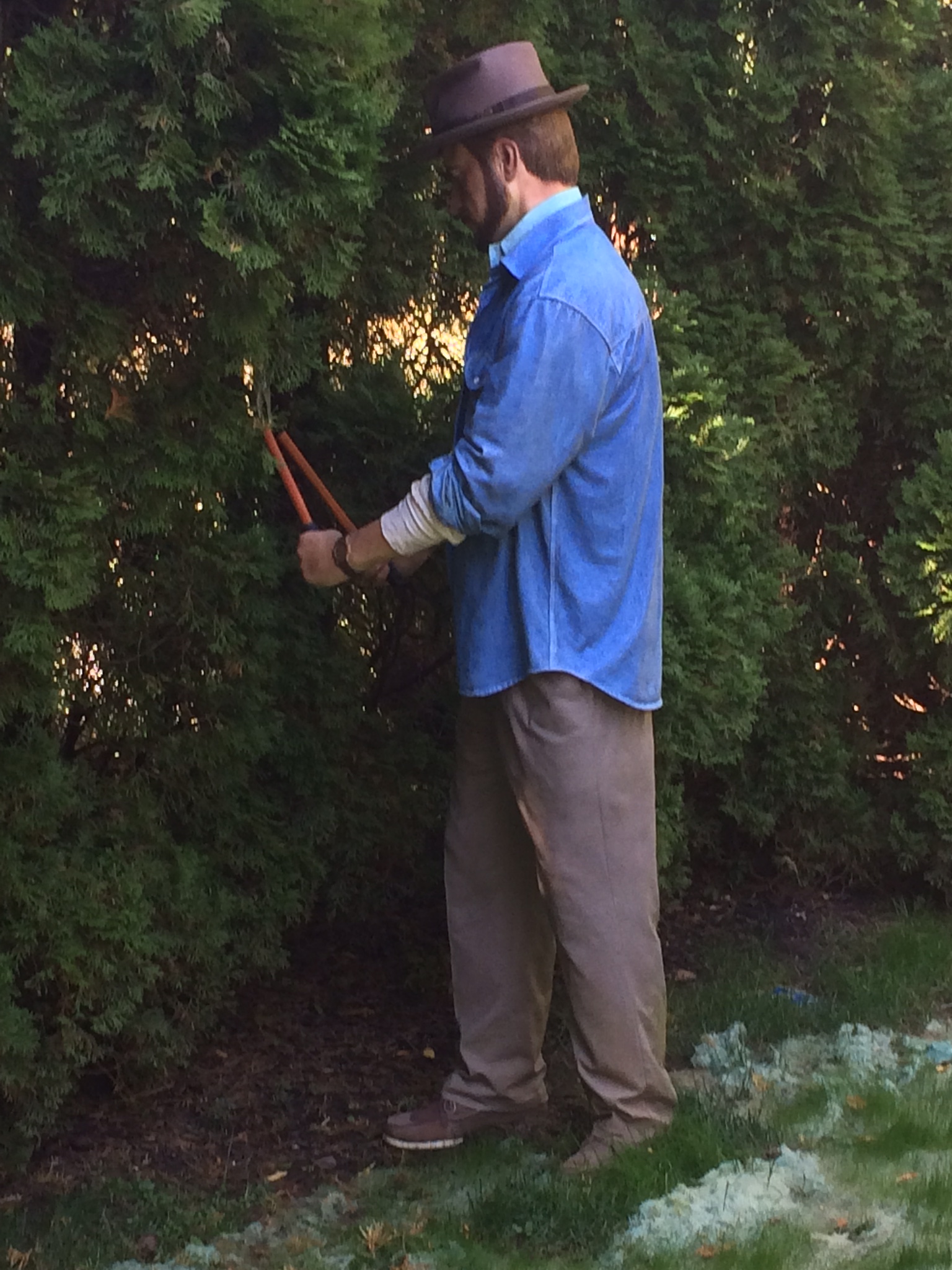
As you walk around the Grounds for Sculpture, these works will sneak up on you. From a distance they look like park visitors, seated on benches or standing beside the road or paths. So many times during my visit I was surprised by a person that was actually a sculpture. What distinguishes Johnson’s work is the vibrant color, not something that is all that common in a sculpture exhibit, and the minute detail. Note the headlines on the newspaper and the spokes and chain on the bicycle.

Grabbing Some Peace

Grabbing Some Peace

Newspaper Reader

Newspaper Reader


A Little to the Right

A Little to the Right

Family Secret

Family Secret

Gotcha

Gotcha

 The Grounds for Sculpture

The attraction here is not just the art, the grounds are also pretty nice. In places it is like hiking in the woods or taking a lakeside stroll. The art is installed in such a way that it almost seems embedded in the grounds, as if it was conceived with this environment in mind.

The Grounds for Sculpture has plaques on many of the pieces inviting visitors to touch. That is true of most of Johnson’s works. Several of his large pieces have been installed on the roads surrounding the museum.  Since this is primarily a drab industrial area the sculptures on the side of the road or in front of the buildings are striking. The God Bless America piece shown above sits next to the main road leading to the Grounds.

There is an excellent restaurant on the premises with a full menu and prices that are modest considering the qualify of what they serve. Only downside is the name, Rat’s.

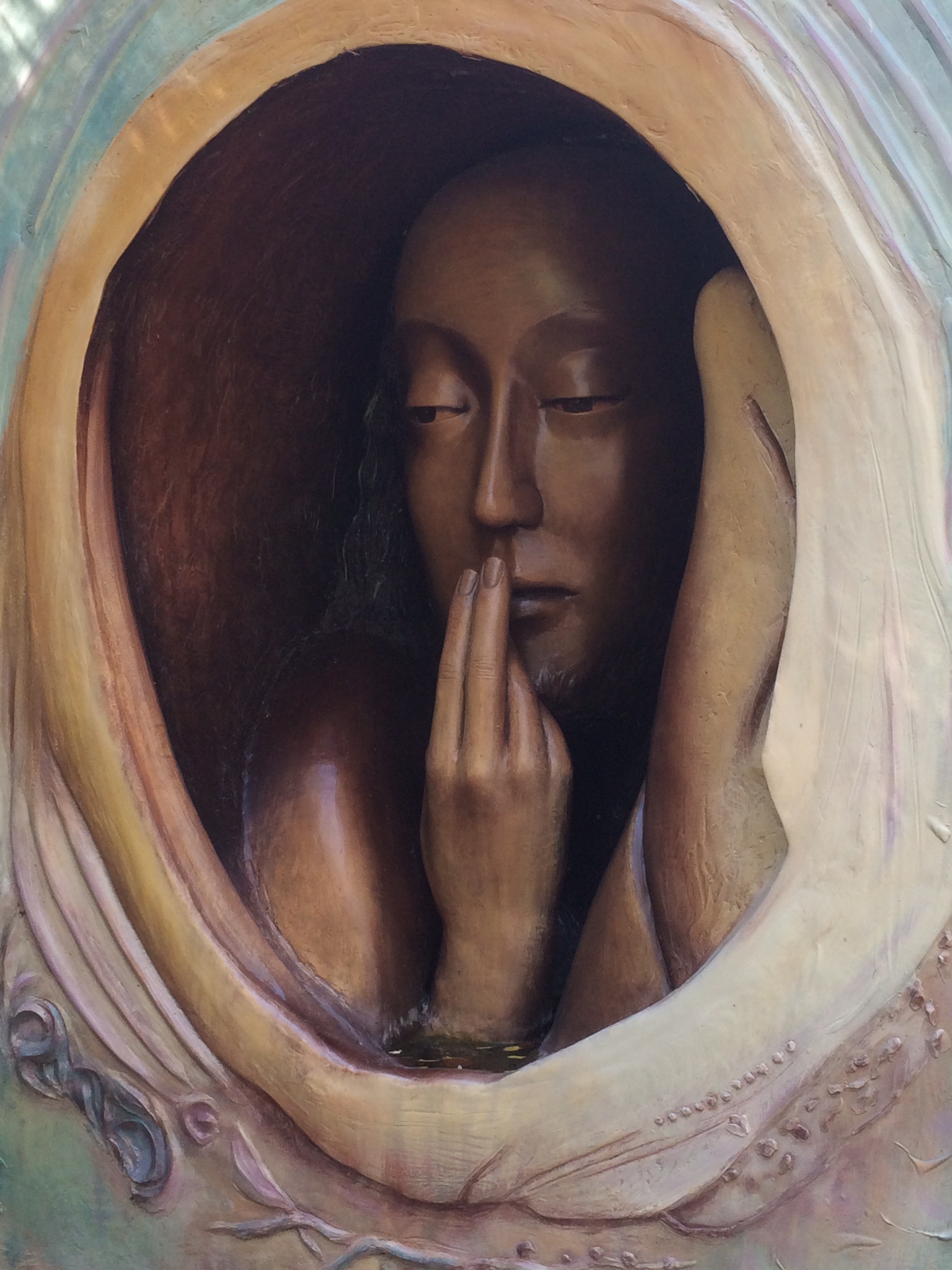
Chamber of Internal Dialogue

Chamber of Internal Dialogue

Confrontational Vulnerability

Confrontational Vulnerability

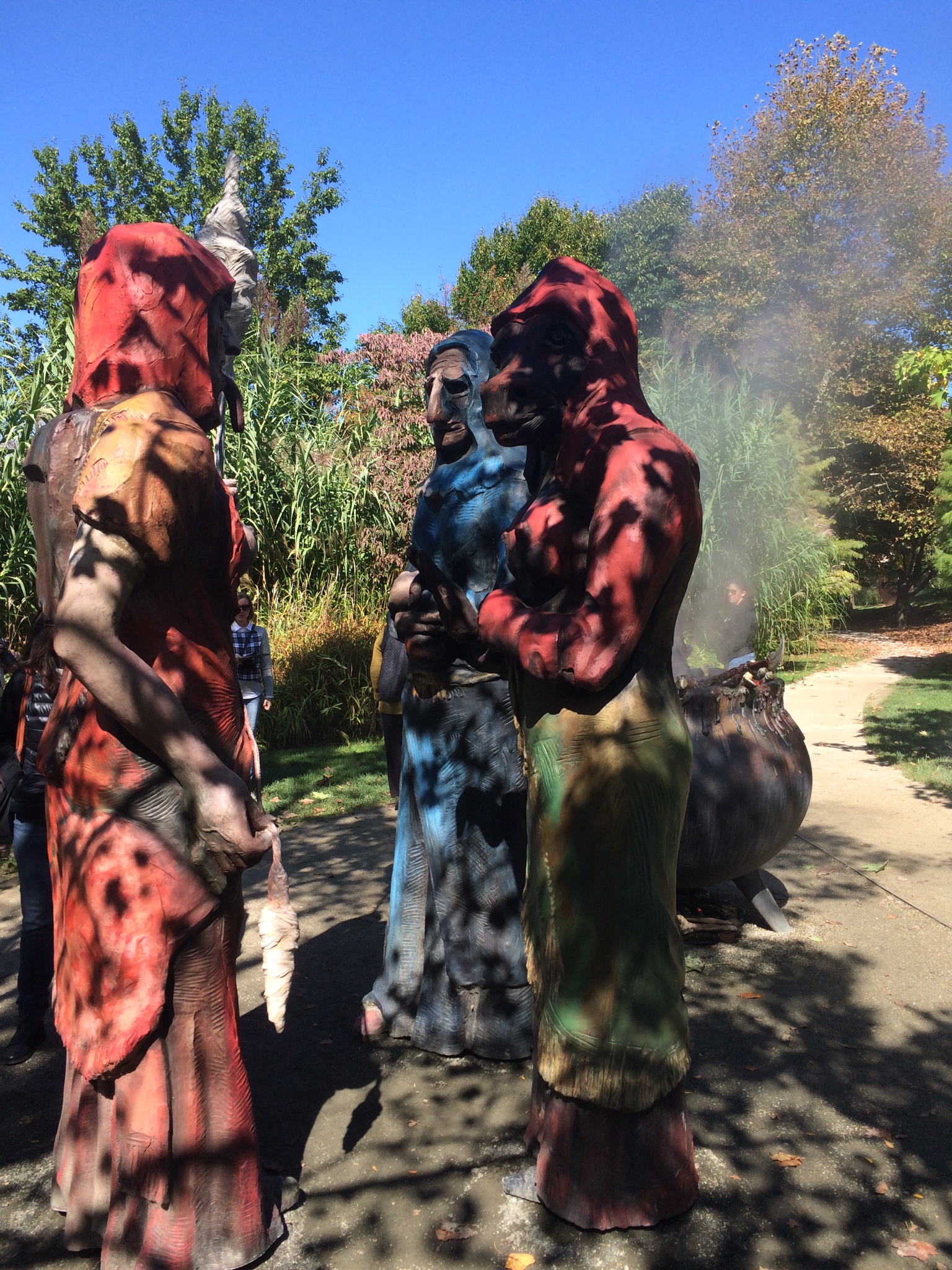
Three Fates

Three Fates

Posted in Art | Tagged , , , | 29 Comments

A Baseball Fan Memoir Chapter 5 – Money Changes Everything

Between 1991 and 2014 the cost of bringing a family of four to the ballpark for a major league baseball game increased 168%. That is based on a statistic called the Fan Cost Index which includes four average price tickets, two beers, four soft drinks, four hot dogs, parking, two game programs and two of the least expensive caps. In 1991 that amounted to an average of $79. In 2014 it was $212.

The average salary of a major leaguer during that time period increased 270% from $891,000 to $3.3 million. At the same time the inflation adjusted median U.S. household income increased 28% from $40,800 to $51,900.

That’s going to change baseball and it’s going to change the experience of attending baseball games. Just as income inequality has ballooned in America, income inequality among major league baseball teams has likewise expanded. In Boston, the most expensive place to attend a baseball game, the fan price index went up 290% to $350. By comparison, in Pittsburgh the increase was 120% to $161.

Fortunately for baseball fans, the disparity in wealth has not completely been reflected in team results. Of the five teams with the highest payrolls in 2014, only two, the Dodgers and the Tigers, made the postseason playoffs. The Yankees, Red Sox and Phillies all failed to quality with the latter two finishing dead last in their division. Two of the teams that did qualify, the A’s and the Pirates, were 25th and 27th, respectively, in the payroll standings.

However, the wealth disparity has clearly impacted the movement of players. The wealthier teams dominate the free agent market which in turn gives them the ability to attract more fans and command higher local TV fees and ad rates. This leads to a lot of player movement, the result of which is that in many smaller markets the fans routinely see the best players leave as soon as they mature. Some teams actively trade their best players before their contract expires because they know they won’t be able to compete in the free agent market. The Tampa Bay Rays this year traded their popular ace pitcher David Price for that reason.

One of the most glaring examples of how money changed baseball occurred in 1998 in Florida. After winning the World Series in 1997, the Florida Marlins owner Wayne Huizenga sold off most of the players who were responsible for winning that title. In 1998, the Marlins finished with the worst record in baseball. The owner sold the team and landed on his feet. The players landed on their feet. It’s only the fans that took it on the chin. (Huizenga was the CEO of Blockbuster and we all know how that worked out.)

Another example is the opening of the new Yankee Stadium in 2009. The Yankees opened the season with their usual star-studded cast. Their attendance was among the best in the league, but if you watched a game from the new stadium on TV, it looked half empty. That’s because no one was sitting in the prime seats behind home plate. The Yankees had the audacity to charge $2,500 a seat (that’s for one game not the season). Even in New York, very few people were stupid enough to pay that. Within two weeks of the season opener, the Yankees were slashing some of their ticket prices in half.

The stadiums where the costs were highest were now experiencing the Madison Square Garden syndrome. All the real fans were in the upper deck.

In baseball’s high rent districts (and I live in the New York area) the days when individual fans purchase season tickets year after year and sit with other fans who have been their longtime ballpark neighbors are gone. The so-called premium seats are for the most part filled with folks who were given those tickets because of a business relationship. The lower level is for expense accounts not family budgets.

Many of these “fans” arrive fashionably in the third inning or so and head out by the sixth. They may be more interested in being seen than seeing the game.  Not the people I want to sit with when I go to a game.

The decades of the 90’s and “ought’s” were probably the time in my life when I was best able to afford the inflated cost of MLB. I certainly forked over silly sums of money for some other stuff during those years. But the idea of spending hundreds of dollars to go to a baseball game just rubbed me the wrong way. I also was less then enamored with watching millionaire players who signed long term contracts and responded with increasingly diminished performance. (This was fairly typical of my hometown Mets until the owners decided to invest in a Ponzi scheme instead of ballplayers.)

But that hardly meant I was done going to baseball games. While the majors were awash in high finance, the minor leagues were having a renaissance in the New York/New Jersey area.

The period from 1961 to 1994 was the dark ages for New York/New Jersey minor league baseball. There was one short-lived venture in 1977-78 in Jersey City. The Jersey City Indians, a poor team affiliated with a major league franchise that had little following in this area and playing in a dilapidated stadium that was soon to be torn down, lasted two years. I made a couple of those games and was sorry to see them go.

Arm & Hamer Park, Trenton

Arm & Hammer Park, Trenton, home of the Thunder, opened in 1994 as Waterfront Park.

Things changed in 1994. In that year the Trenton Thunder began playing in the brand new Waterfront Stadium as a AA affiliate of the Detroit Tigers, and the New Jersey Cardinals, a single A St. Louis affiliate, opened play at Skylands Park in Sussex County. Both played to full houses. The Cardinals have since moved on, but the Thunder are still going strong and are one of the best organizations in baseball.

Independent league ball moved in four years later with teams in Atlantic City, Little Falls, Bridgewater and Newark. Camden came onboard in 2001 and a single-A Phillies affiliate was born that year in Lakewood. Also during this time the Yankees and Mets finally decided to stop blocking minor league baseball in their territory and the Staten Island Yankees and Brooklyn Cyclones were born.

That’s ten teams created in an 8-year period. Newark and Atlantic City have fallen by the wayside but most of the others are pretty successful.

While it would cost $337 to take a family of four to a New York Yankees game, for a few bucks more ($350) I could buy a season’s ticket for the New Jersey Jackals. And the Jackals will toss in the playoff tickets for free. Who knows what the Yankees would charge now for playoff tickets if they made it. The  Jackals have a once a week dollar beer night, a dollar dog night, an all you can eat night and even a weekly game when I can bring my dog. That’s pretty typical of minor league promotions.

Robinson Cano began his professional career as a Staten Island Yankee

Robinson Cano began his professional career as a Staten Island Yankee

Sometimes you get an early glimpse of players who are destined for stardom.  Watching the New Jersey Cardinals I saw the parent club’s number one draft choices Matt Morris and Adam Kennedy with their first professional team. Neither lasted too long in Sussex County before moving up the chain. I watched Robinson Cano as a Staten Island Yankee and Melky Cabrera in the Trenton Thunder outfield.

The majority of players in Class A and AA ball aren’t going to the majors. What you are seeing is guys chasing a dream. In independent ball, the chances are even more remote. These guys aren’t ready to give up because they love the game. A stark contrast from the over-the-hill millionaire playing out a long-term contract.

No one’s getting rich and fat in the minors. And no one’s blowing a paycheck to watch them. I like it like that.

In next week’s post I’ll offer some retirement advice for baseball fans.

Posted in Baseball, Sports | Tagged , , , , | 4 Comments

On a Street Once Lined with Striking Silk Workers

On a quiet residential street in Haledon, N.J., one house stands out from its neighbors. It is taller, more stately, and much older. And it is a national landmark because of its role in the history of the American labor movement.

Botto HouseThe Botto House was the rallying point for the 1913 Paterson silk strikers. Forbidden to assemble by Paterson authorities, they were welcomed to Haledon by its sympathetic socialist mayor William Brueckmann. The Bottos, an Italian immigrant family of textile workers, offered their home as a place where strikers could assemble safely and where strike organizers and sympathizers could meet.

Among the people who spoke from the balcony of Botto House were International Workers of the World founder Big Bill Haywood; Irish immigrant Patrick Quinlan, who was one of the organizers of the strike; Elizabeth Gurley Flynn, who later became a founding member of the ACLU; and muckraker author Upton Sinclair (“The Jungle”). As many as 20,000 striking silk workers attended the Sunday rallies in front of the Botto House.

1913 Paterson Silk StrikeThe 1913 strike included about 24,000 workers. It was a general strike, including women and men, skilled and unskilled, immigrants and English-speakers. The goal of the strikers was an 8-hour day. Pietro Botto, who owned the Haledon house, was himself a mill worker who worked 10-12 hours a day, 5-1/2 days a week.

Eventually the manufacturers outlasted the strikers and they went back to work. Some of the textile shops offered concessions, including reducing the work day from 10 hours to 9.

1913 Paterson Silk StrikePietro and Marie Botto and their daughter migrated from Biella, Italy, in 1892. They were part of a larger movement of weavers as what had been a cottage industry was consumed by industrial production. The Bottos first settled in West Hoboken (now Union City). After 15 years of working in silk mills and adding three more daughters, the family was able to purchase the house in Haledon which was known as a “streetcar suburb” of Paterson.

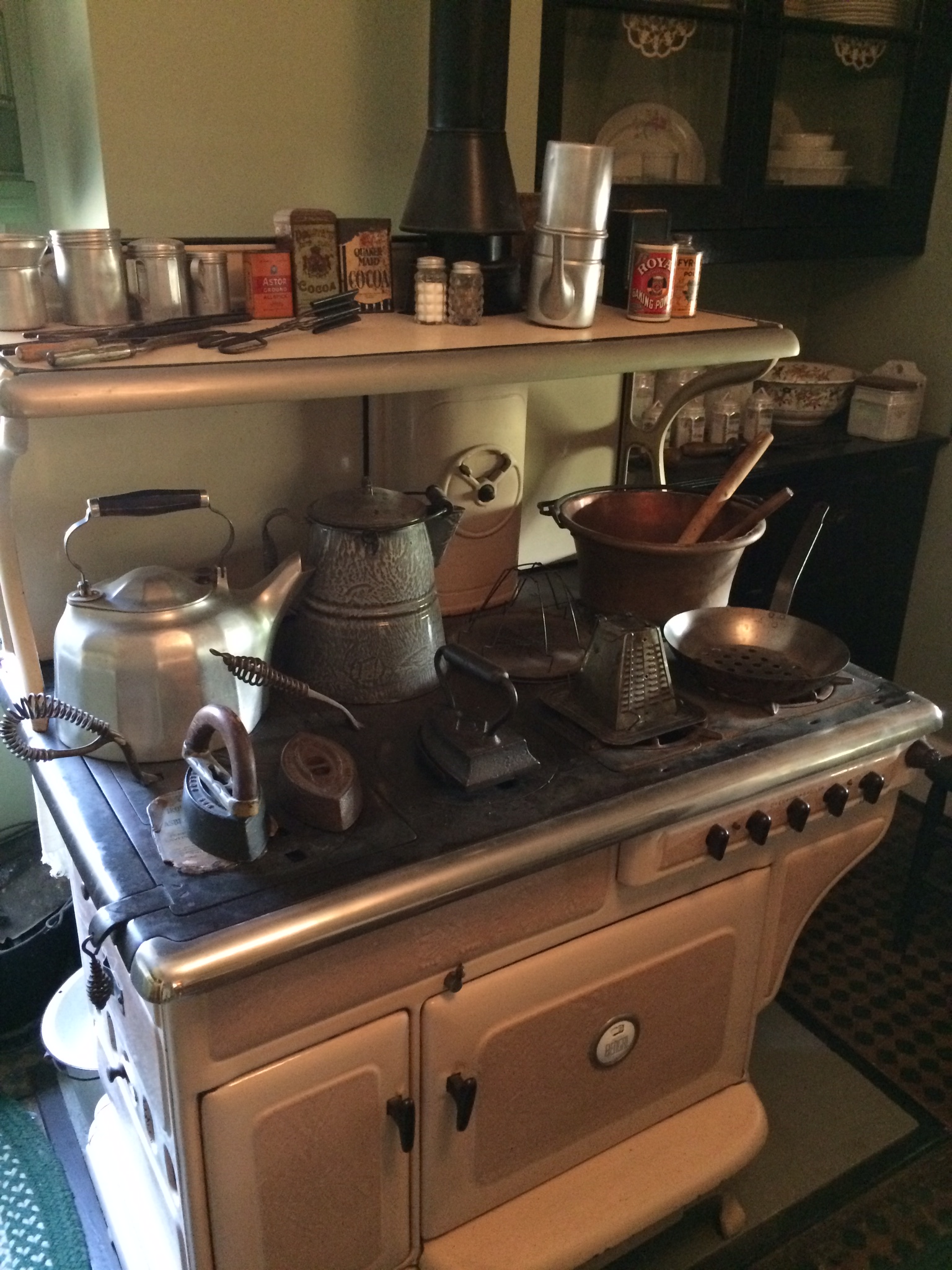
The 12-room Botto house was built in 1908. It was also used by the Bottos as a Sunday retreat for workers, offering a bocce court, card tables and food prepared by Marie and her daughters. The home has been restored to what it looked like as the early 20th century home of Italian immigrants.

Botto House kitchenBotto House


The Botto House is now the site of the American Labor Museum. In addition to its exhibit about the 1913 strike it also has temporary exhibits. True to its roots the focus of these exhibits is immigration and labor.

American Labor Museum

American labor Museum

American labor Museum

Posted in History | Tagged , , , , , , , , , , | 24 Comments

A Baseball Fan Memoir Chapter 4 – New Places, New Faces

I spent the 50’s in New York’s iconic and since demolished ballparks. The 60’s were all about Shea. And I started the 70’s drinking beer with my buddies at the “Mistake by the Lake.”

In the 80’s and 90’s, largely due to the nature of my job, I traveled a lot to cities in the U.S. These were cities where my employer had offices and more often than not they were major league cities. I visited stadiums n Philadelphia, Baltimore and Washington. I went to Atlanta and Pittsburgh and saw baseball in Chicago, Minneapolis, Houston and Denver.

Along the way I added a couple more “favorite teams.” One played in the best ballpark in baseball. The other in arguably the worst.

I went to Memorial Stadium in Baltimore a couple times. For me it was memorable mostly for the bumper-to-bumper parking lots. I was fascinated by the fact that you seemed to be able to get out of the bumper-to-bumper lots in Baltimore faster than the more modern sort of lots where you park between the lines and drive in aisles. Of course if you wanted to leave in say the sixth inning, you were screwed.

If you think of the things that changed baseball in the last few decades what first comes to mind might be money or steroids or TV. But in terms of positive impact on fan experience, nothing was more important than the opening in 1992 of Oriole Park at Camden Yards.

Think of the state of baseball stadiums at that time. They were mostly giant oval concrete structures. ”All purpose” stadiums, very utilitarian and utterly characterless. Veterans Stadium in Philadelphia, Three Rivers in Pittsburgh, Riverfront in Cincinnati. The sheer size of these structures (some had seating capacities in excess of 60,000) combined with the oval shape that didn’t correspond to the baseball diamond, assured that there was not a good seat in the house.

Also, following the urban flight and blight of the late 60’s and 70’s, many stadiums began to be built outside the city, in suburbs, maybe even atop landfills. There was nothing around. No strip of sports bars, no outside restaurants. There was the stadium and there was the parking lot. For some of these venues, the closest place to get food outside the stadium was a gas station convenience store.

So you had to eat in the stadium. And that was another story. Matching the institutional design of the all-purpose stadium was the institutional food service which at best served a quality of food that might match a high school cafeteria in a downscale neighborhood. Did people eat hot dogs at baseball games because they loved hot dogs? Or was it because the other options were a box of Crackerjacks or a cold, stale pretzel.

Built to be part of the city of Baltimore, not to run away from it, Oriole Park features an open outfield looking out onto the warehouse that made it look like Baltimore. Located downtown near the Inner Harbor with new light rail train service it brought people into the city. The iron and brick design was intended to be retro but it proved to be futuristic. Camden Yards set the standard for the next 20 years of stadium design with new stadiums in Philadelphia, St. Louis, Pittsburgh, New York (Citi Field) and many others built with similar designs.


camden yardsAnd when you walked onto the ground one of the first things you see is Boog’s Barbeque.  No longer will baseball fans have to eat ARA Services’ boiled hot dogs. Boog’s is independently owned, has great food and it’s all Baltimore because it has Boog’s name on it. (Boog Powell is a former Oriole great and fan favorite.) There’s a restaurant in the warehouse and concessions run by other local eateries. In the same way that Camden Yards changed the thinking about how to build a ballpark the Orioles changed the way MLB teams went about feeding their fans.

The stadium is more than 20 years old now but it is still a thrill to go there and as the Orioles head into the post season I look forward to seeing the atmosphere at Oriole Park, even if only on TV.

While I became an Orioles fan because of their stadium, I became a Twins fan in spite of it. I’ve attended several Twins games in Minneapolis and most of them were at the Metrodome. I’ve always felt the idea of indoor baseball was a little strange but even among indoor stadiums, the Metrodome had to be the worst. It was truly like playing in a giant inflatable plastic bag.

But what made the fan experience in Minneapolis were the fans themselves. Where were the 30-something blowhards standing, beer in hand, and bellowing out crude wisecracks that only their drunken buddies thought were funny? Why wasn’t anyone heckling the other team? Why wasn’t anyone booing every mistake or shortcoming by the home side? No one seemed to be moving their family to other seats because of the obscene language of their neighbors.

Twins logoI wasn’t in New York anymore. Nor Philly or Boston for that matter. It was the proverbial family atmosphere that was supposed to be part of the lure of baseball. I know friends have told me they’ve found the same thing in Cincinnati and in Kansas City and in other cities but it was in Minneapolis that I experienced it. The fans were friendly and polite, but also knew all the players, were completely attentive to the game and were unfailingly supportive of their Twins.

I remember one game in particular that I attended in the Metrodome as possibly the best baseball game I’ve ever seen. Johan Santana of the Twins and Curt Schilling of the Red Sox hooked up in the pitchers dual in which each went the full nine giving up only a single solo home run. The Sox ended up taking the lead in the 10th, but a Jason Kubel grand slam in the bottom of that inning won it for the Twins.

The Twins and the Orioles have had their moments in the sun but neither has won a World Series for a long time and neither routinely sports a roster with marquee names. But that isn’t what I’m interested in. It’s more the atmosphere at the ballpark, the facility itself and the fans, that would keep me coming to the games.

In next week’s post I’ll consider the influence of money on the game and how I became disillusioned with the major leagues.

See also, A Baseball Fan Memoir Chapter 3 – On the Banks of the Cuyahoga.

Posted in Baseball, Sports | Tagged , , , , , , , | 6 Comments

A Baseball Fan Memoir Chapter 3 – On the Banks of the Cuyahoga

As the decade of the 70’s began, I was a college student in Northeast Ohio. I had some time on my hands, a friend or two with cars, and an on-campus job that yielded a couple of dollars. That was the perfect scenario for becoming a Cleveland Indians fan.

The Indians played in Cleveland Municipal Stadium, a New Deal era structure which also went by the name of “Mistake by the Lake.” It was old, massive, dirty and windy.

The early 70’s era Tribe squads were about as appealing as their ballpark.  Between 1969 and 1972, the four years when I was in Ohio, the Indians finished last twice and next-to-last twice. I tried to think of who the best players were at the time, but I couldn’t think of any. I looked online to jog my memory and it did just that. Ray Fosse was the Indians catcher. He was an excellent player but was beset by injuries including a broken shoulder from a violent collision at home plate with Pete Rose in the 1970 all-star game.

I stole the title for this chapter from the movie Major League in which Bob Uecker uttered the phrase “on the banks of the Cuyahoga” in setting the stage for another Indians game. The Cuyahoga is the river that famously caught fire in 1969. So aside from the deteriorating stadium and crappy team, the Indians played alongside a river that stunk and looked putrid.

cleveland indianAnd yet what I learned in college was to love the Indians. While I considered myself a politically conscious and progressive college student I somehow managed to overlook the name of the team, the logo which featured a caricature of an Indian with a shit-eating grin on his face and the fact that there were usually some shirtless folks at the game banging drums and wearing dime store headdresses.

Going back to the idea that we had more time than money, we tried to maximize both by going to doubleheaders. Here’s what I remember about those glorious and long Sundays watching the Indians at Municipal Stadium.

First of all these games didn’t fill the stadium, nor were there a lot of people heading into downtown Cleveland for a Sunday stroll at the time. So we ignored the parking lots and easily found spots on the street. This was free…almost. After you parked your car you were likely to be approached by a young fellow who would offer to guard it for you for $5. We were up for that. Not much of a parking fee and my friend’s car was always there when the game was over.

It seems as though every one of these doubleheaders were against Detroit. And my memory is that the Tribe usually got ambushed in the first game and scalped in the second. I checked baseball-reference.com and it turns out that the Indians really didn’t play Detroit every weekend. But I did find a Sunday in June of 1970 in which the Tigers won the first game 7-2 and the second game 9-8 and the whole event took more than 7 hours. That sounds fairly typical of my experience going to Indians games.

As you can imagine, college students sitting in the hot sun for that length of time tended to put away some beer. In fact we would consume quite a bit of beer, so much that I remember having to change our seats because there were so many discarded beer cups there was no room for our feet. That of course was not a problem because as you slowly waded into the back end of the second game there were seats aplenty.

What was a problem was that if you were going to drink that much beer, you were going to have to pee, and just about every other guy who was still at the stadium had the same problem so there was a good sized line for the men’s room. The toilet facilities in a stadium as old as the Cleveland Muni were not what you would expect to find in a 21st century ballpark. So while I was not totally surprised to see a group urinal type of arrangement I was bewildered to see that the urinals here were like bathtubs and guys lined up around the tub trying to avoid eye contact while they peed. At the tail end of one of these games, my friend Jay and I stood in line for a good 20 minutes, bouncing up and down trying to hold it, and then when we got to this cluster flush, neither of us could make ourselves go.

I haven’t been to a game in Cleveland for many years although I very much hope to get there in near future. I have never quite been able to bring myself to wear a cap or shirt with a stupid-looking Lone Ranger era grinning “Indian” on it. But I will always be a Cleveland fan.

(In next week’s post I wander off into the midwest and find new teams to root for.)

Posted in Baseball, Sports | Tagged , , , , , , | 29 Comments

(Nearly) Live at Social Media Week – The Future of Publishing

Content will be created for mobile. Distribution will be through social networks. Monetization will come from native advertising. Is that the future of publishing? Or is that already the state of the state for media properties?

Mobile, social and native were the key discussion points at today’s Future of Publishing session at Social Media Week Sydney. The panel included representatives from Buzzfeed, Vice and two Australian media properties, Sound Alliance and Mamamia.

The conventional wisdom about content for mobile is that it must be shorter and simpler because it is harder to keep your reader engaged.  Buzzfeed’s Simon Crerar pointed out that when you make video for mobile you use one or two people and you crop tightly.  But not everyone agreed. Alex Light of VICE said “mobile hasn’t changed the way we are creating content.” He also noted that while many consumers are accessing content on mobile they are using their phones as second screens and casting or slinging the content onto larger screens.

If the content is good enough most of the panelists felt longform can still work with a mobile audience. Neil Ackland of Sound Alliance claimed their data shows that the mobile audience is not dropping off sooner than other audiences.

All of the panelists represented media properties that are heavily dependent already on social distribution. Crerar said.”Buzzfeed wouldn’t exist without social media.” And Light added that social media has “allowed us go into video and compete with networks and to get a global audience.” And that at a cost that is minimal compared to owning a TV network.

Facebook and Pinterest were the most frequently cited traffic drivers for these publishers. There are some differences based on demographics. Jamila Rizvi said Mamamia targets an audience of women in the 25-50 demographic and so for them Facebook and Pinterest are what works. But Light noted, “The younger part of our audience is moving beyond Facebook and beyond Twitter. We want to be in the next place they go.”

The combination of using a mobile device and accessing content via social networks means, in Rivzi’s words, “the audience is just coming into articles and leaving.” So for publishers there is less emphasis on the home page and more on how you display on social properties.

Everyone on the panel is using at least some native advertising. Ackland said, “Native advertising is the future of where we see out business going.” He expects that the time isn’t very far away when native becomes the majority driver of Sound Alliance’s revenue.

The ideal situation for VICE is what Light referred to as the holy trinity.  That would mean “we can create stuff that we want to make, that out audience wants to watch and that attends to brand objectives.”

Generally the panelists didn’t acknowledge experiencing any negative feedback from their audiences due to native advertising and didn’t see any confusion on the part of their readers about sponsored content. Crerar claimed that Buzzfeed still maintains a strict separation of church and state. Those from smaller properties, however, may not have the ability to do that.

Neal Mann of News Corp., who moderated the panel, added another motivating factor for native advertising. “If publishers don’t play in this space what’s to prevent brands from producing their own content and becoming media brands themselves.”

Posted in Digital publishing | Tagged , , , , , , | 4 Comments

(Nearly) Live at Social Media Week – Journos With Their Ear to the Ground

If you attended a panel discussion with the title “From Headlines to Hashtags” you might expect to find a group of media types talking about how social has become a key distribution platform, about how they promote themselves and their stories on different networks.

But this group of journalists, including representatives from newspapers, TV and radio in Los Angeles, talked instead about how they listen.

Los Angeles Times Social Media Editor Stacey Leasca, responding to a question about what was the goal of her department, responded “make LA Times a person that people wanted to engage with.” Leasca, who is part of the editorial, not the marketing, department talked about how the Times recently shifted their social media focus to “take a harder look at what our audience is saying.”

Michael Slate, a producer with KPFK-FM, the Pacifica station in LA, talked about how he and the KPFK staff use social media for gathering news. He cited a couple of stories that they would not have known about were it not for Twitter. “Lots of news doesn’t get reported and when it does it gets slanted,” he said, adding that being able to get tweets from people who are on the scene enables the news staff to get beyond the surface of a story. Egypt and Ferguson are examples of that.

Chris Schauble, morning news co-anchor at KTLA 5, is also a committed Twitter user. He pointed out the value of having people being able to tweet information while you are actually on the air. “Twitter turns all of your followers into mini-assignment desk managers.”

As with all journalist and social media panels, there was some discussion of the urgency and immediacy that social media creates as well as some concerns about verifying sources.

The overall impact, according to Schauble, is that there is more breaking news because of the “abundance of information we are all exposed to.” Asked whether he was reluctant to cite other news organizations as sources, he said “we are beyond the day of caring where the attribution comes from. We just want the info.”

Leasca said it is the LA Times policy that they would rather be right than first. She did say there were times when they would tweet a breaking news headline before they had finished the full story.

Slate said, “I treat any story I get with the same rigor.” All agreed with the need to verify social media sources. But Schauble noted that sometimes social media can provide that verification by providing multiple tweets about breaking news.

Posted in Uncategorized | Tagged , , , , , | Leave a comment

(Nearly) Live at Social Media Week – The Future of Money

Do brick and mortar bank branches have a future? Will digital currency make credit cards obsolete? Will the individual investor choose instead to become a crowdfunder?

A Social Media Week Los Angeles panel tackled those questions earlier today as they looked at the impact not only of social media but of technology, apps and mobile on the finance system.

“No Money, No Problem – How Easy Access to Capital is Disrupting Traditional Finance,” the title of the session, is welcomed by crowdfunding champions like Chance Barnett, CEO of crowdfunder.com. He described a “renaissance” of capital availability for startups which has resulted from crowdfunding and the movement of capital markets to online. That of course is a good description of his business. His vision of the future of investing, and for his company, involves opening the early stage investment market to everyone.

William Quigley, managing director of Clearstone Venture Partners, sees changes that have taken place in VC funding as supporting Barnett’s vision of an “opportunity for VC’s and the crowd to play together.” Quigley said that VC’s have become more reluctant to take a position in very early start ups. They are more likely to wait for “some sign of success” after which they will start throwing money, a lot of money, at it.

Quigley also offered the prediction that “all currencies within 25 years will be digital.” He noted two factors that will continue to push the growth of Bitcoin and similar currencies. One is the fact that online retailers all have “redlines” of parts of the world where they don’t do business because it is too risky with credit cards. Digital currency removes the risk of, for example, selling books online in the Ukraine or in Nigeria. He also noted that digital currency offers sellers the assurance that the transaction cannot be “pulled back” as is commonly done in the U.S. with credit card purchases.

Ben Katz, who is the founder and CEO of card.com, talked about how technology is impacting banks. He noted how companies like his own can offer services that target the “9 out of 10 people who don’t matter to banks.” While “banks are on your side if you are someone with $10k or more in your bank account,” the cost of banking has gone down dramatically with online banks that can be accessed by mobile. From Katz’ perspective there will be increasingly less reason for average customers to deal with institutions who have no real interest in them.

Posted in Uncategorized | Tagged , , , , , , , | Leave a comment

Digital Deception: Wikipedia’s PR Problem

In June of this year a joint statement was issued by 11 PR firms promising to not try to edit Wikipedia articles about their clients without going through “proper channels.” Some of the biggest names in the business were part of this initiative, including Burson-Marsteller, Edelman and Ketchum.

So it is nice to know that the PR folks are going to play by the rules when it comes to Wikipedia. But that begs the question as to why they felt the need to make this pronouncement. I think we all can guess the answer to that one. And in fact in the statement made by the PR consortium they commented “We also acknowledge that the prior actions of some in our industry have led to a challenging relationship with the community of WikiPedia editors.” In other words, PR people have used whatever means at their disposal to circumvent those editors and change the content on behalf of their clients.

Here are some examples:

The most widely cited agent of Wikipedia deception is a Texas based agency called Wiki-PR. If you look up Wiki-PR in Wikipedia you’ll see this. “Wiki-PR is a consulting firm that formerly marketed the ability to edit Wikipedia. It was then banned, including all of its employees, contractors, and owners, by the Wikipedia community for unethical editing.” What the Wikipedia investigation reported to uncover was hundreds of sockpuppets created by this agency to edit its clients’ pages.

A pretty substantial UK PR firm, Bell Pottinger, was caught in 2011 editing its clients’ Wikipedia entries, an act which Wikipedia co-founder Jimmy Wales suggested was an example of the agency’s “moral blindness.”

In 2012 another UK firm, RLM Finsbury, a WPP agency, removed negative information from Wikipedia about the Russian oligarch Alisher Usanov. At the time, Usanov was listing his mobile phone company on the London exchange.

Back in the U.S., the PR firm New Media Strategies employed by Koch Industries, used the sockpuppet MBMadmirer to edit the Wikipedia entries of Charles Koch, David Koch and the page titled “Political Activities of the Koch Family.”

But it is not only PR agencies who are at work on the popular crowd-sourced online encyclopedia. Jamie Bartlett, author of a technology blog in London’s Telegraph, notes that “plenty or people and companies edit their own pages, a practice known in the Wikipedia community as Wikiwashing.” (Wikiwashing: how paid professionals are using Wikipedia as a PR tool.)

An earlier story in the Telegraph pointed to the case of UK MP Chuka Umanna. Seems as though Umanna’s Wikipedia article was amended and the new version compared him to Barack Obama. An investigation to trace that update led to a computer in Umanna’s office.

Bartlett also noted that “a new cottage industry has grown up around Wikipedia, the professional editors.” One such individual is Mike Woods, whose Web site is www.legalmorning.com. Among Woods credentials is an AAS (?) degree in law enforcement from Kalamazoo Valley Community College. Woods describes himself as “an expert Wikipedia article writer with over 10,000 edits and 100’s of pages created.” His pitch: “I know what it takes to make an article notable for inclusion and can get your page published today.”

So what is Wikipedia doing to deal with its PR problem? Most of the instances of sockpuppetry described above were uncovered as part of a Wikipedia investigation. When they are found, the fraudulent accounts are deleted. In November of last year a cease and desist letter was delivered to Wiki-PR, although it appears they have neither ceased nor desisted. The Wiki-PR home page continues to identify itself as “the easiest way to accurately tell your story on Wikipedia.”

Following the statement issued by the PR firms in June of this year, Wikipedia issued new rules that require editors who have a conflict of interest to disclose that fact.

If you are being paid by someone to write or edit information about that individual or organization, that is considered a conflict of interest. Wikipedia’s policy, in that instance, is that the party with the conflict of interest, that is the paid promoter, cannot edit Wikipedia entries directly but rather must use the service’s “talk” pages to recommend changes that will be considered by the Wikipedia editors.

For PR people the stakes are pretty high. Do a search for just about anything and the Wikipedia page is likely to show up as the first or second result. So you can be sure that an agency’s perceived ability to improve a company, organization or individual’s appearance and reputation on Wikipedia may be a key decision making point in determining who gets the job.

From the perspective of the PR community, Wikipedia’s rules are confusing and their responsiveness is slow. A survey taken by Penn State Assistant Professor of Public Relations Marcia DiStaso in 2012 found that only 21% of PR people were aware of and understood Wikipedia’s policies. While the survey didn’t ask why, I would suggest that the results may have more to do with inexperience than with lack of understanding. It’s not that hard to figure out.

You can make the case that no one knows more about a company or organization than that entity itself (and its paid communications contractors). That no doubt is true. But that hardly means they are going to take an even-handed approach to self description. As a pretty frequent user of Wikipedia do I trust PR people as a source? I think I’d prefer my sources to be a bit more unbiased.

Posted in Digital Deception, Digital publishing | Tagged , , , , , , , | 24 Comments