I picked up this book for a buck at a second hand bookstore. It was stamped “discarded,” by the Brown County Library in Nashville, Ind. I don’t know what the folks in Brown County are thinking about because this is a really good book.
Riding the Rails is the story of American teenagers during the Depression, some 250,000 of them. With no prospect of work, no perceived reason to stay in school and a desperately shrinking home environment, they hit the road. Or, to be more precise, the railroad. They jumped on, stowed away in and rode atop freight trains, travelling the country looking for fruit to pick, lumber to chop and grain to harvest. And maybe for a little adventure along the way.
This is first-hand history. WGBH/PBS produced a documentary called “Riding the Rails” in 1998 as part of the “American Experience” series. In researching that film, the producers solicited letters from survivors of the experience. They heard from about 3,000 of them. It was the content of those letters that was used to produce both the Peabody Award winning film and the book. So, oddly, this is a book that was based on a TV show. It was published by TV Books, a publisher whose goal was to do just that. They’ve since folded.
Those who survived a hobo adolescence in the 30’s remember it as a moving, life-changing experience. But at the time not a happy one. Hopping on and off trains is dangerous. Some lost their lives and some lost their limbs. Boxcar boys and girls were hungry, tired, broke and scared. Mostly they were hungry. As one of them noted: “One of the sad things about kids on the road was that they didn’t know how to play. Life was earnest, life was hard.”

(Tim Emerich)
Here are a few of the people I was introduced to in Riding the Rails.
- Arvel Pearson lived behind a railroad station in an Ozark village. By the age of nine he was working in a strip mine. When the Depression hit, the mines closed. Arvel was on the road at age 15 and stayed there from 1930 to 1942 picking up a few days work here and there as a migrant farm worker in the summer and a coal miner in the winter. In 1939 the National Hobo Convention named him “King of the Hoboes.”
- Clarence Lee was one of six children in a Baton Rouge, La., family that was forced through hard times to go into sharecropping. Clarence was sent out by his father who told him he could no longer support him. As a black teenager he had to confront racism as well as hunger, cold and danger. By working on a dairy farm for 10 cents an hour he was eventually able to buy his parents out of sharecropping. The film shows Clarence in his eighties still working as a groundskeeper at a school in California.
- Unlike most of the kids who rode the rails, John Fawcett left a comfortable home in West Virginia looking for adventure. “I didn’t see suffering until I ran away from home. It would be a cold and unfeeling person who wouldn’t be stunned and angered at the squalor of the streets and migrant camps.” He devoted much of the rest of his life to fighting for human rights. A member of the ACLU, he was active in the antiwar, women’s rights and gay rights movements.
The movie includes interviews with many of these survivors. It also has 1930’s newsreel footage with some of the adolescent transients. The black and white images of the railroads, the Chicago Worlds Fair and a “hobo jungle” are accompanied by a score of blues and folk music of the era, including Woody Guthrie and Brownie McGhee. There’s also some original songs by “Guitar Whitey” who himself was riding the rails in the 30’s.
The book has a lot more detail than you can get into a one hour+ documentary. My only issue with the book is that it is imperfectly edited, with a couple instances of a missing word or broken off sentence. But it is so interesting. Reading it made me wonder why when history is taught in our schools they don’t teach high school kids the history of people their age. Surely it would be more compelling and more meaningful for them.
Riding the Rails is now more than 15 years old. You’re not going to find it on the front tables at the Barnes & Noble. The publisher is out of business but there are still quite a few copies available on Amazon both new and used. Or maybe your librarians had a little more appreciation for this story than the ones in Brown County, Indiana. The documentary is available on YouTube and through PBS.


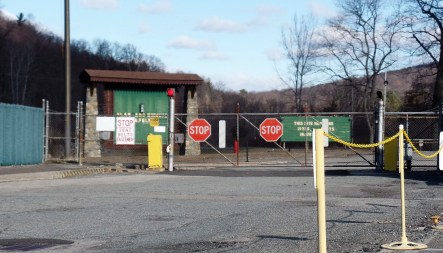
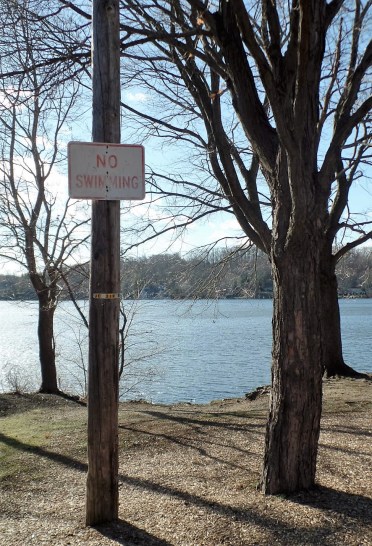 Acid Brook is a stream that originates on the DuPont property and dumps into Pompton Lake. I’m sure you can guess how it got its name.







 If you are not familiar with the term, native advertising is a modern iteration of what used to be called “advertorial.” The idea is to create content that appears to be “native” to the publication in which it is embedded. So instead of seeing an obviously paid display ad, the advertising content may be delivered as part of a menu of headlines substantially similar to any of the headlines of stories that the publisher’s staff may have written. There are in fact publishers who offer up staff writers to advertisers to make their content look even more “native.”